
Linda Tan’s Blog
On becoming a designer-practitioner- researcher
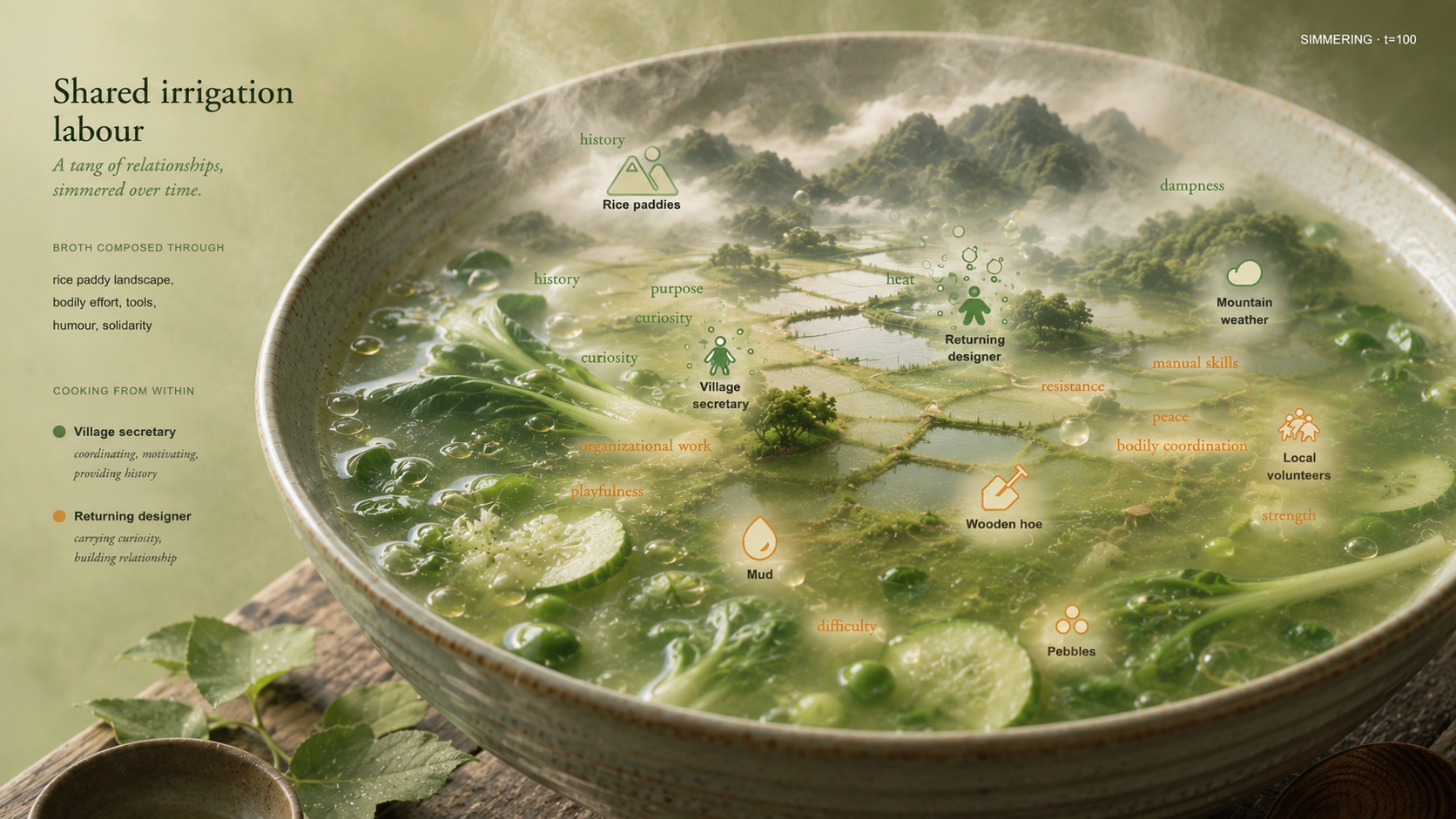
From networks to stew: a visual and conceptual experiment on relations
Crucially, the broth in tāng is not merely a container for the ingredients. It is often the most valued part of the experience. In Cantonese soup traditions, the broth may be treated as the essence of the dish and the primary thing to be enjoyed, while the still-intact ingredients are sometimes secondary or optional to eat. This gives the metaphor additional force: the medium is neither empty space nor a passive carrier. It is something the ingredients and time have collectively produced—and something that, in turn, carries their transformations 2.
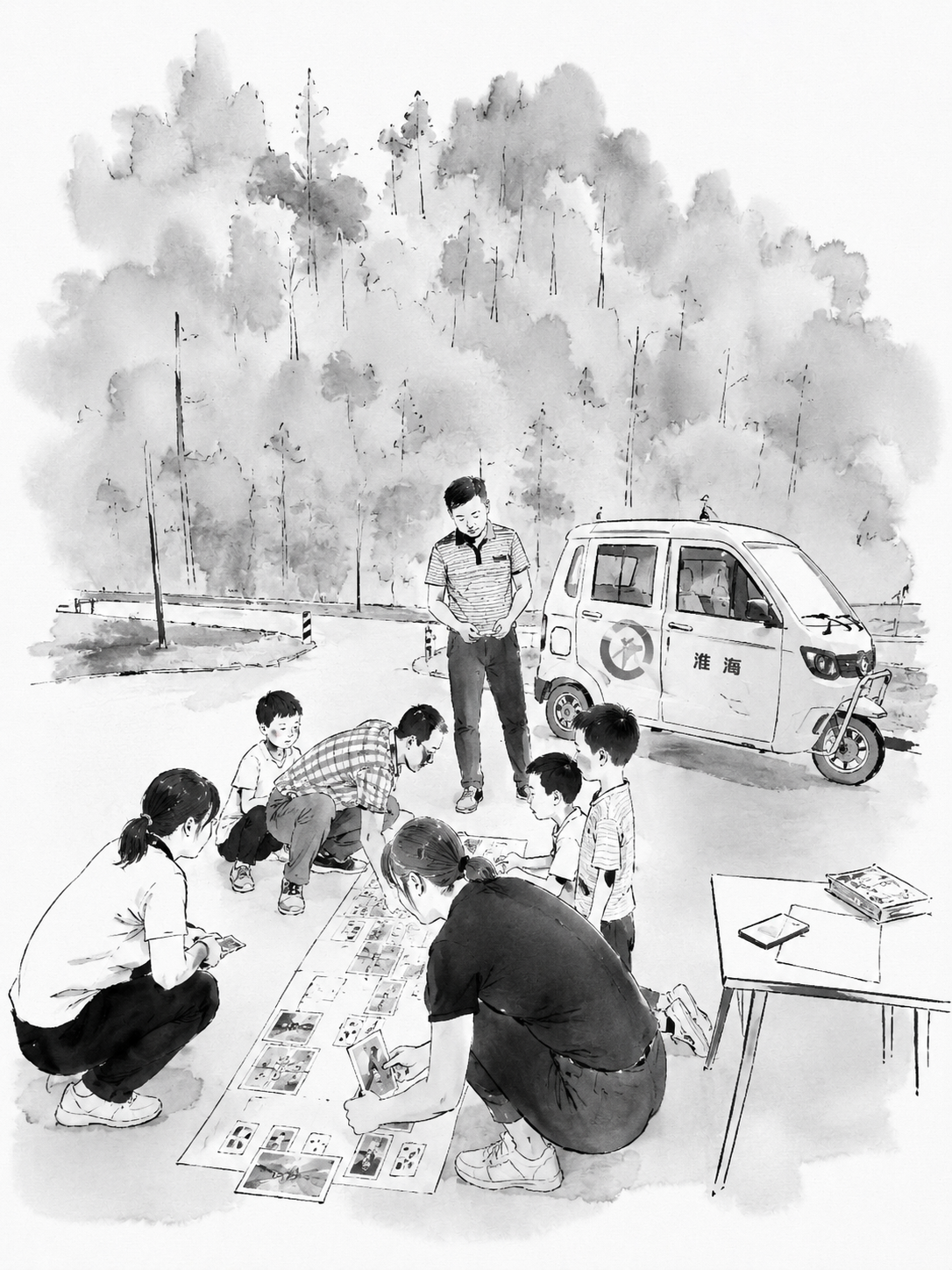
Entering twice: braiding official and relational labour in community-based design
In my earlier practice, I often understood being relational through signs of familiarity: being invited to dinners, making small talk, and remembering people’s names. But as relational practice has become normalized in my work, I can no longer romanticize it as simply warmer, softer, or more human than formal design practice. Being relational, too, is labour.

Preparing for the field as a Heideggerian practice
For the past year and a half, I have been rethinking and experimenting with what preparing young practitioners for the field through a more Heideggerian orientation might be like. This article traces the ongoing process of reflection and experimentation. My intention is not to present a successful case study, but to spark broader conversation about how we approach action, learning, and engagement in social innovation and charitable work.
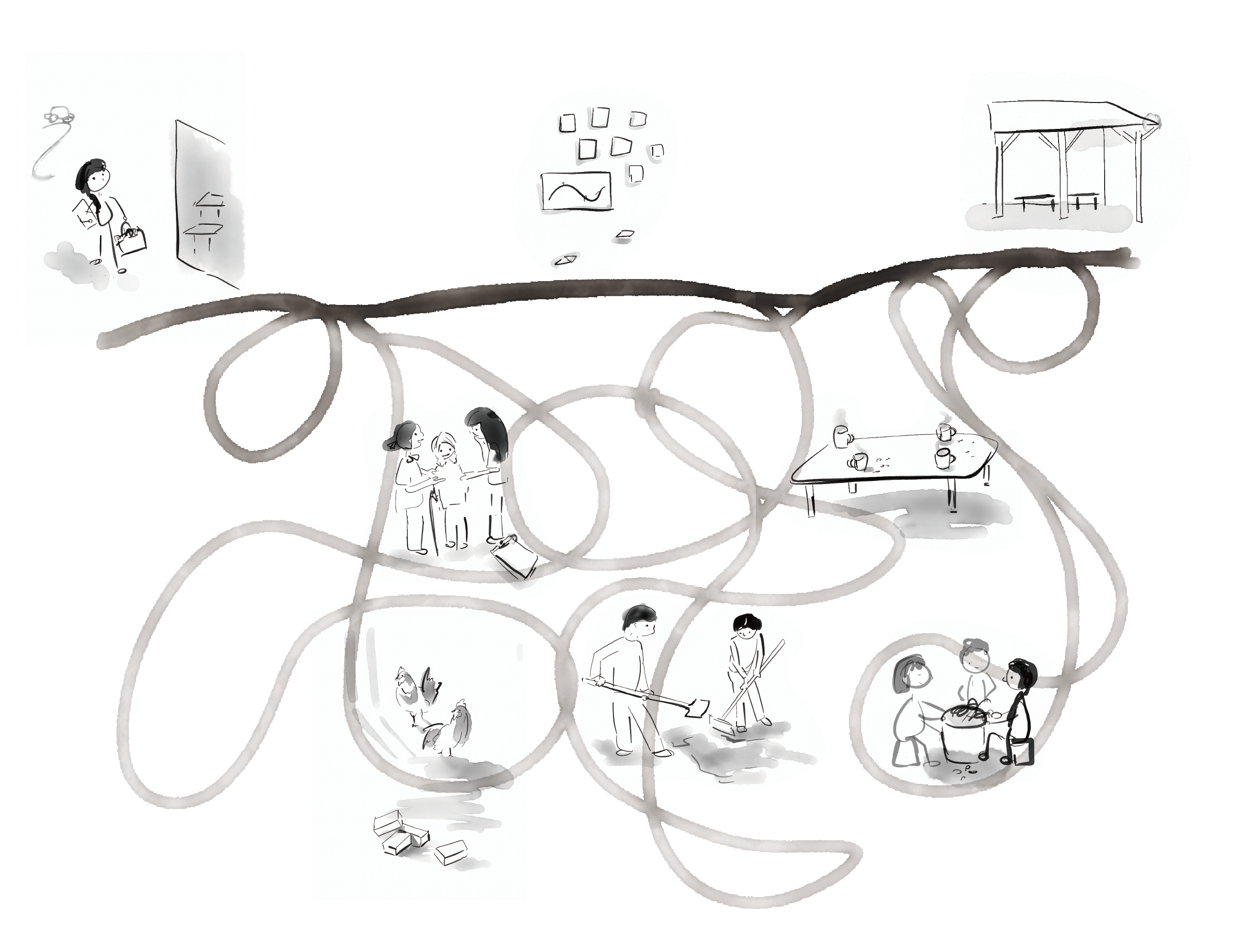
Design’s subplots and the time that goes missing
Looking back from some imagined future, I think this paper will feel pivotal in a personal way. Not because it is extremely very well written (I carry many regrets), but because it marks my first departure from trying to demonstrate “competence” in the tools and processes of my practice.

A 10 minute performance of my PhD: On becoming a backdoor designer (script included)
(Linda gets off a car, holding a clipboard and a tote bag full of Post-its.) Linda (L): I'm so happy to be here! It took me 6 months to finally convince my NGO sponsor to support my co-design work with this village!

Recreating first encounters
We were walking across the rice fields with teachers and parents to do home visits when someone asked about the cost of our plane tickets. We casually shared how much we each spent on flights from the U.S., Canada, and Malaysia. Gasps rippled through the group as they did the math. “You spent that much just to bring some books to our school?” they asked, bewildered.
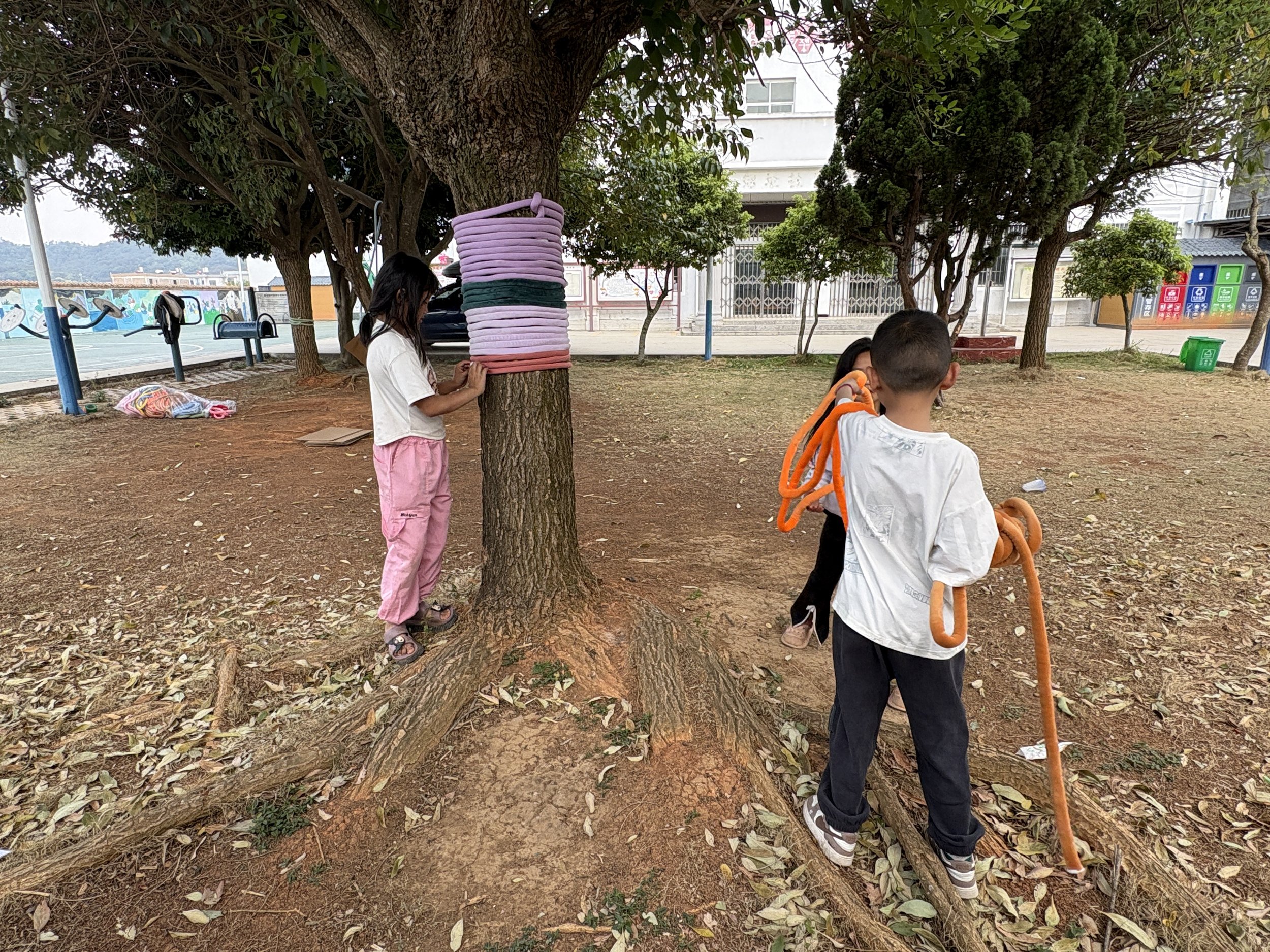
Between wrapping and unwrapping yarn
With the man still lingering nearby, clearly waiting for us to leave, I wanted to end on a note of pride. I reminded the children that many cool spaces—like campsites, music festivals, and markets—are designed to be temporary. I also reminded everyone that we discovered many ways to use the chunky yarn, and that we captured photos to showcase our work. I asked everyone, myself included, to think about what we can do with these things.

What makes a design opportunity important?
We tried to reverse-engineer those “John Nash moments”—hoping to extract a method, a mental algorithm we could teach others. But each time we tried, our conversations circled back to personal experiences, gut feelings, and values. We couldn't extract neat formula. Maybe it’s a kind of complex reasoning that only comes with lived experience and practice.

Busy slow-walking
Midway through our first week of preparations, we received an unexpected and urgent call from Han. She anxiously asked if we could arrive the next day to “make the designs.” This felt like a walkback, as we thought we had agreed on not using the conventional way of having quick decisions made between the designer and the village committee while leaving the rest of the community out.

The ways of arbitrary powers
Whenever we organize a co-design activity in a village, I always notice the presence of "nonparticipants". This year, I found myself in a similar position for a project I had no desire to be a part in.

The potentially stolen wind chimes and the symphony of chairs
On a scorching hot summer day in Shitang Village, I found myself in an impromptu conversation with the children on the difficult topic of governance.

Languages for innovation: when we speak practitioner vs speak project manager vs speak scholar
Since this is a learning-based event, the challenge we faced was this: what are the ways that a decade of on the ground, local practice be shared, so others can capture the depth and richness of these experiences?
We decided to do this in two ways, in tandem.

An invitation to toy with playing - designing a participatory pop-up playground for immigrant communities
We decided, we first need to embody this play experience in what Latour calls the “social thing”, the thing being a system of prompts/toys, and the social being community play behavior.
And After a bunch of research, first and second hand, we honed in on the following design principles:

Why I forced myself to start blogging?
If I learned anything from design practice, is to be brave to present the real world with really underdeveloped versions of a imagined future. So, I thought, I just need to 1…

A village Innovation Centre that refreshes itself with locally co-created knowledge
When I was first approached with the project, I was immediately concerned with how effective occasional design workshops could be in bring actual long lasting benefits to the local community. And this is how the idea of the Village Innovation Centre came to me.