01 | A mountain among many
2026. 01
In the first week of January 2026, it felt as if the life I knew was quietly crumbling beneath me.
It is usually the busiest time of the year, when my small design consulting company delivers project outcomes and negotiates new contracts. But something had been shifting for a while. Whether it was the economy, or AI, or the fading relevance of consulting itself, I had begun to feel that the world no longer needed what we offered.
At the same time, a deeper unease had been growing. I had spent more than a decade working in social innovation, often in rural China, with the intention of fostering meaningful community participation. Yet again and again, I found myself unable to align this intention with the expectations of charitable sponsors and institutional agendas.
When my business partner told me that one of our clients wanted him to join as an in-house employee, I knew I should support him. But the moment made something harder to ignore: I no longer knew where, or how, my work could hold.
To escape this anxiety, I decided to take a weekend trip to Yangshuo for outdoor climbing, after more than a year of staying strictly indoors.
Returning this year, I found a place both familiar and shifting. International climbers were coming back, new crags were being developed with glass resting halls and curated coffee tents, and friends were expanding their businesses. Yet at the same time, climbing spaces were becoming more uncertain—some areas restricted by local authorities, others absorbed into more profitable tourism ventures.
It was through a “Climbing Anthropology” group I had joined the year before that I began to pay closer attention to these changes. The group sought to understand how climbers interact with local communities and environments, and how more sustainable forms of stewardship might emerge. As a newcomer, I was still unsure what my role within it might be.
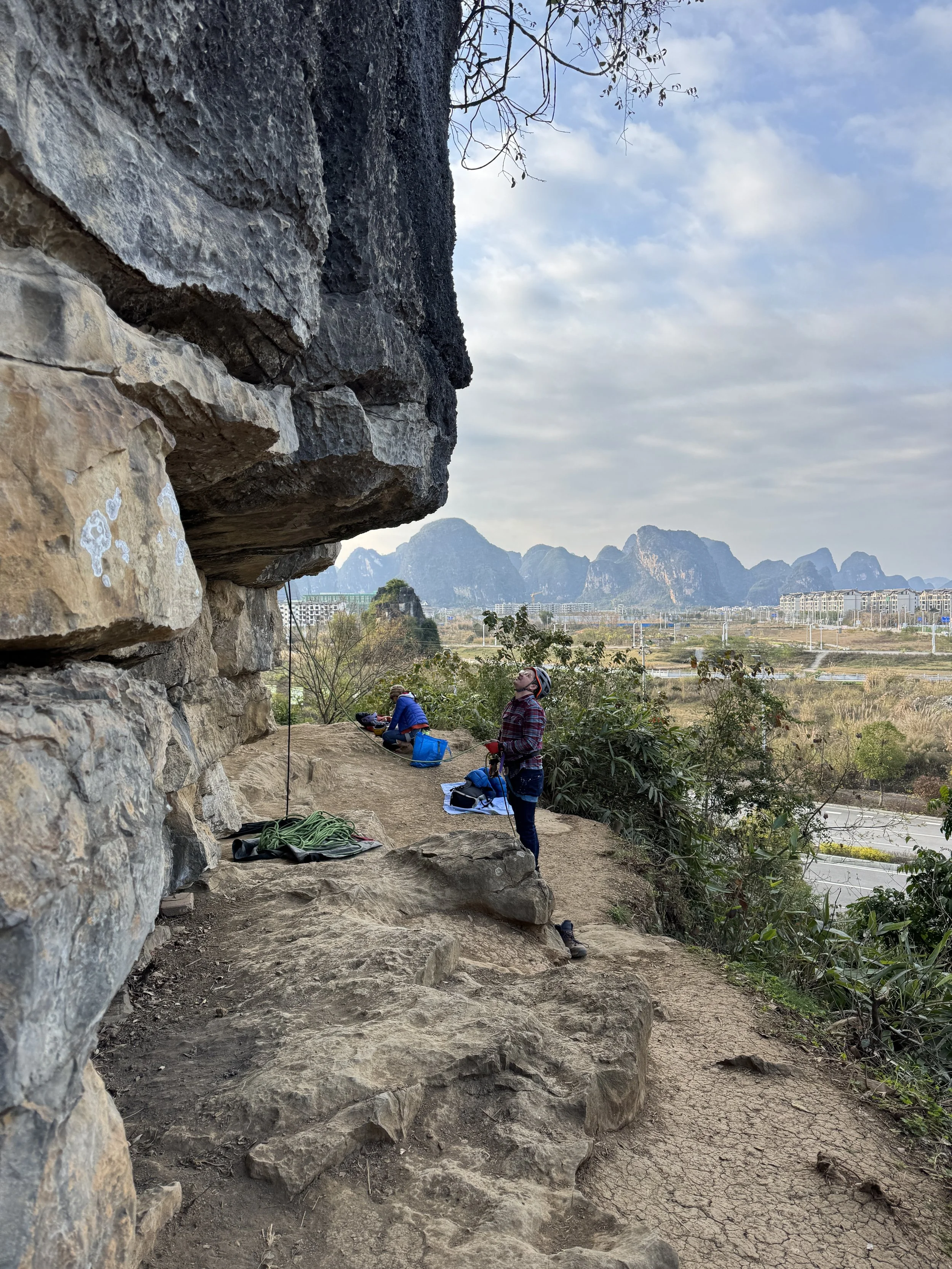
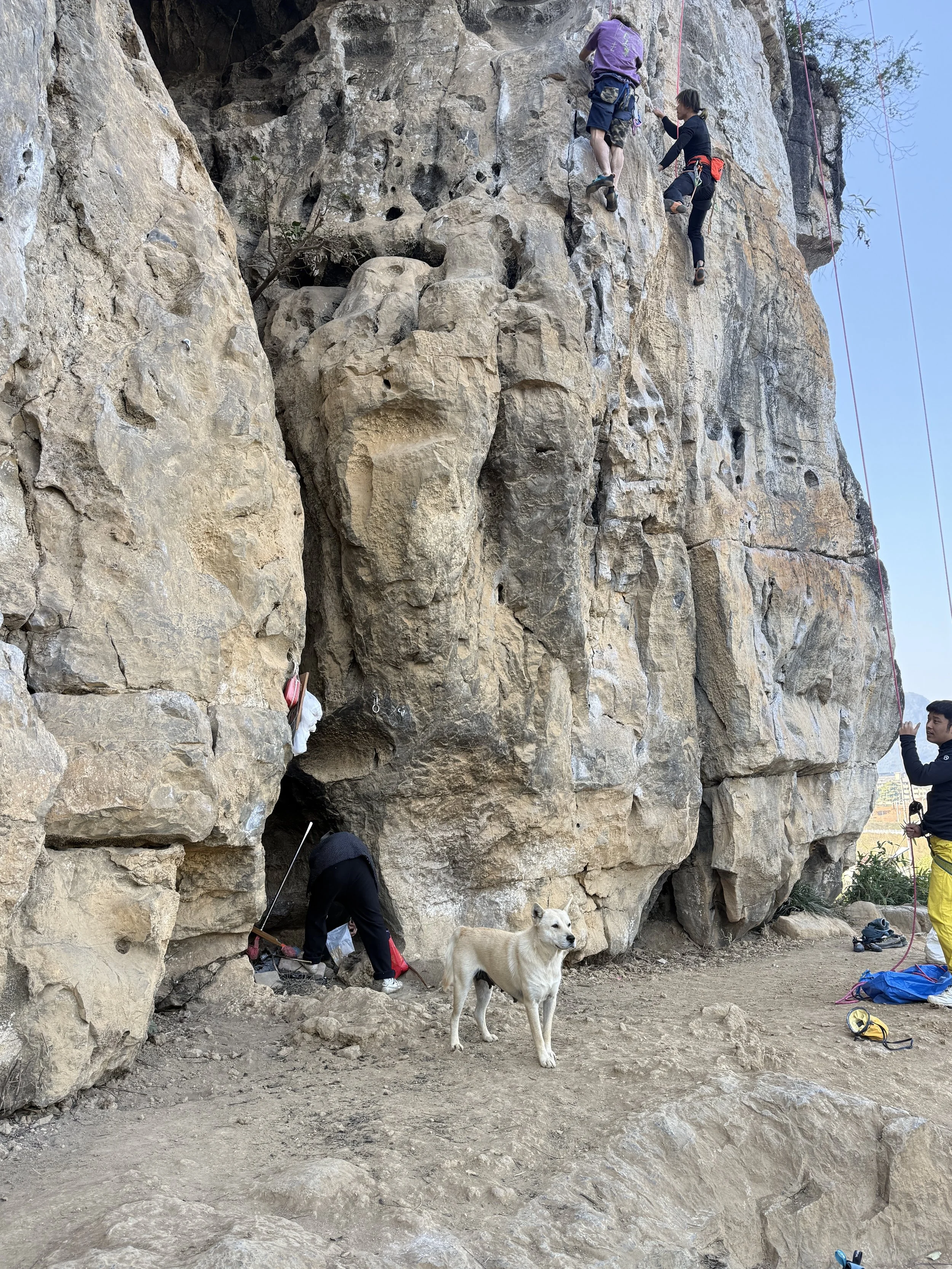
In returning to outdoor climbing, I chose to revisit a familiar place: a limestone crag known as the Egg.
The Egg is a standalone formation about 6 km from the center of Yangshuo. It is not a place for complete beginners, nor for the most advanced climbers. But with its accessibility, moderate routes, and quiet atmosphere, it has long been a place for climbers like me, somewhere in between.
The Egg also came with a person.
The first time I visited a few years ago, she just appeared quietly behind us, holding up a QR code. My friend Tc, who brought me there, scanned it and paid 2 RMB per person.
“The Grandma of the Egg,” he said casually.
“Who is she?” I asked.
“She's just always here. Probably the farmer from nearby.”
I looked through the bamboo and out across the landscape, all I could see was the wide road by the crag and a construction site in the distance.
Each time I returned, she would appear again, as if summoned by the mountain itself.
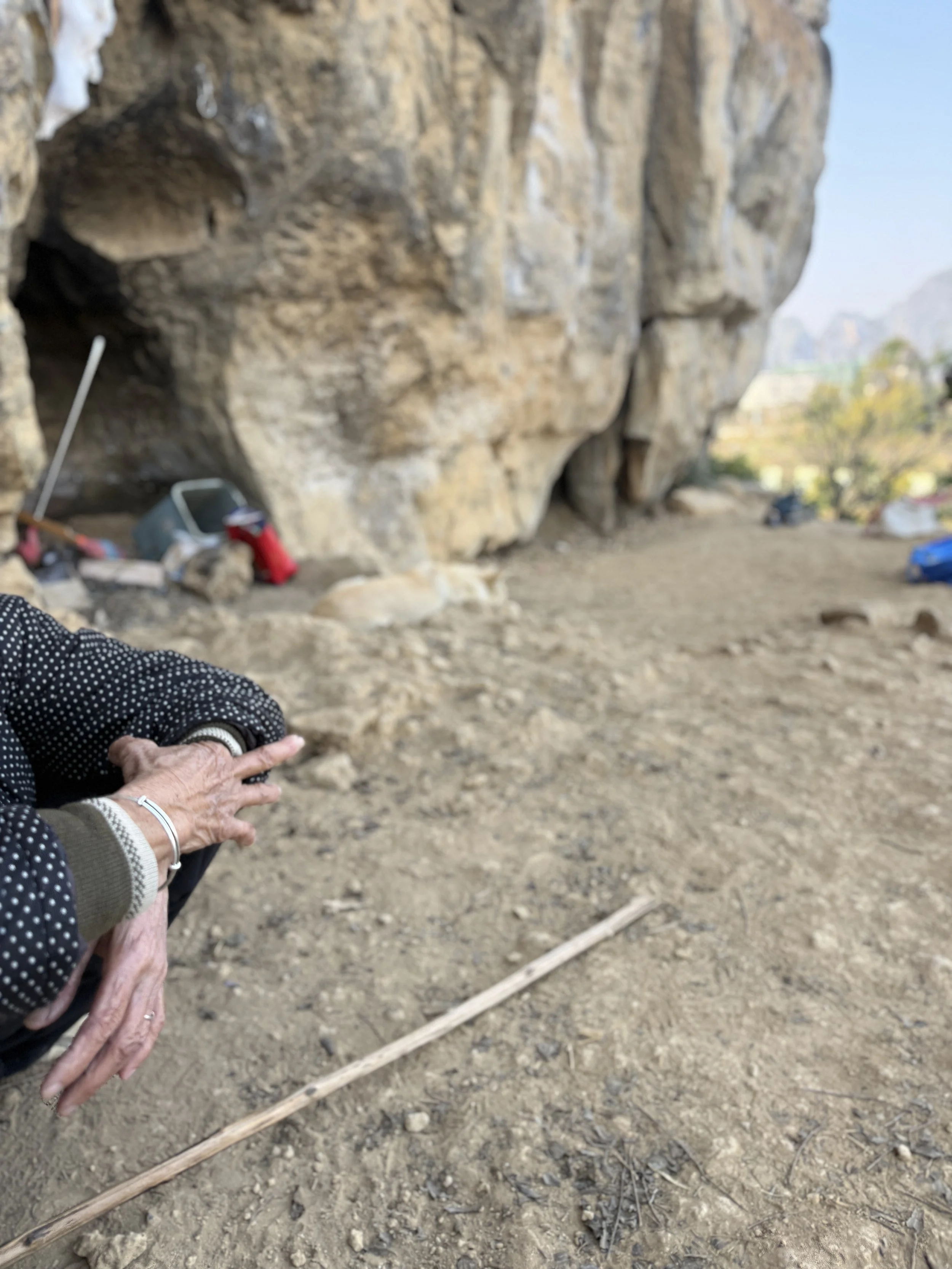
This time, three years later, when the same small, hunched figure with a walking stick emerged once more, I decided to speak with her.
She told me that we were standing in a village called Denglongshan (灯笼山, Lantern Mountain).
That her family owns half of this mountain.
That her vegetable garden lies just below the crag.
That her late husband built the access paths.
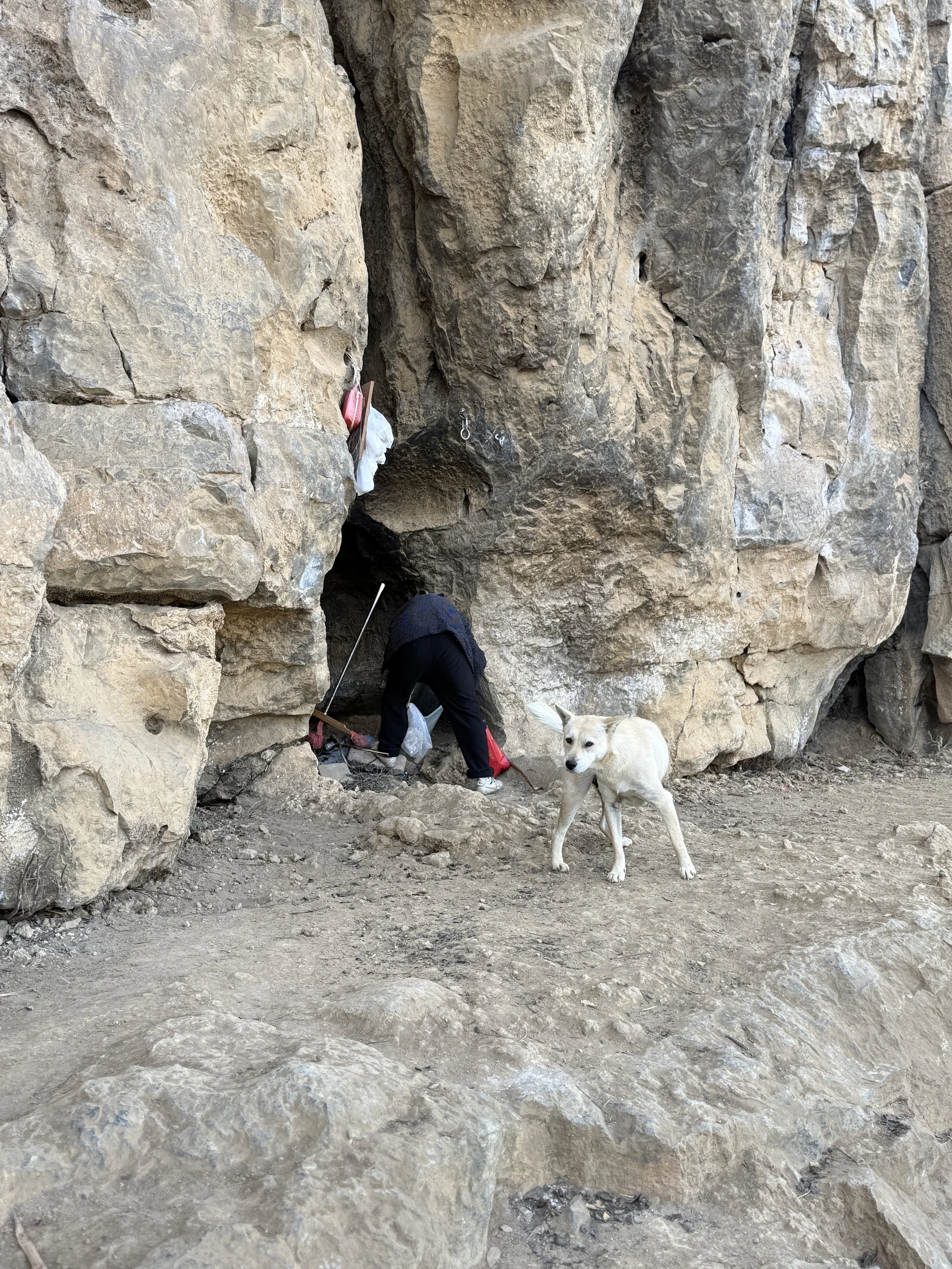
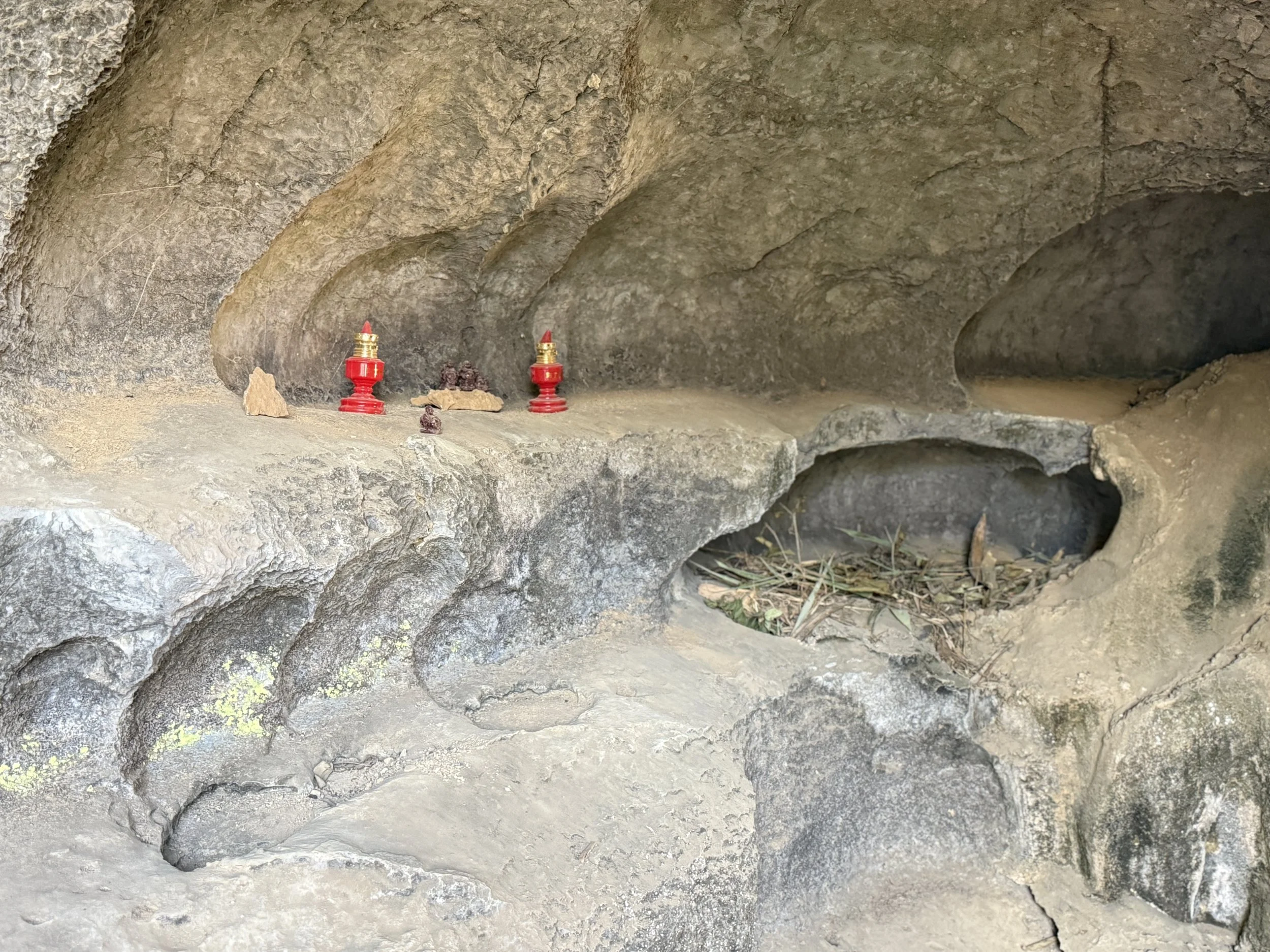
That she clears the trash left behind by climbers each day, and tends to the ritual candles in the cave.
She told me that climbers come from all over China, and from other countries. That all the local climbing coaches know her, and that most are kind to her. She told me her last name was Lu.
And then Grandma Lu told me something else.
She said that she does not call this mountain “the Egg.”