05 | Wrapping dumplings
2026. 03. 22
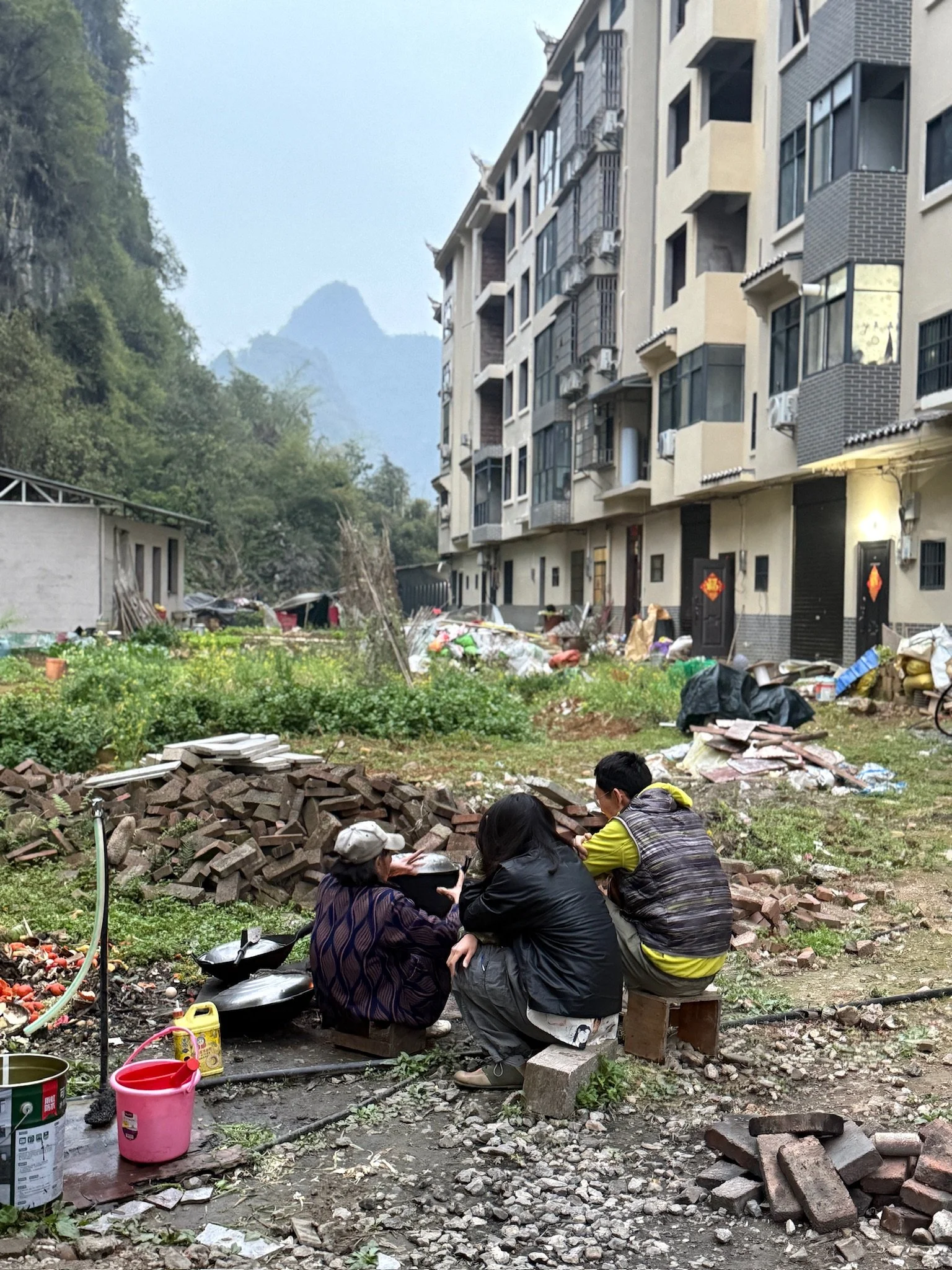
Just after 3 in the afternoon, Kayla, Jingwen, and I took a 14-minute Didi ride from the wet market by West Street—the central commercial area of Yangshuo—to the big intersection by Grandma Lu’s house, 6 kilometers away. In the car, we carried a bag of minced pork, dumpling wrappers, half a roast duck, some eggs, and a box of buffalo milk.
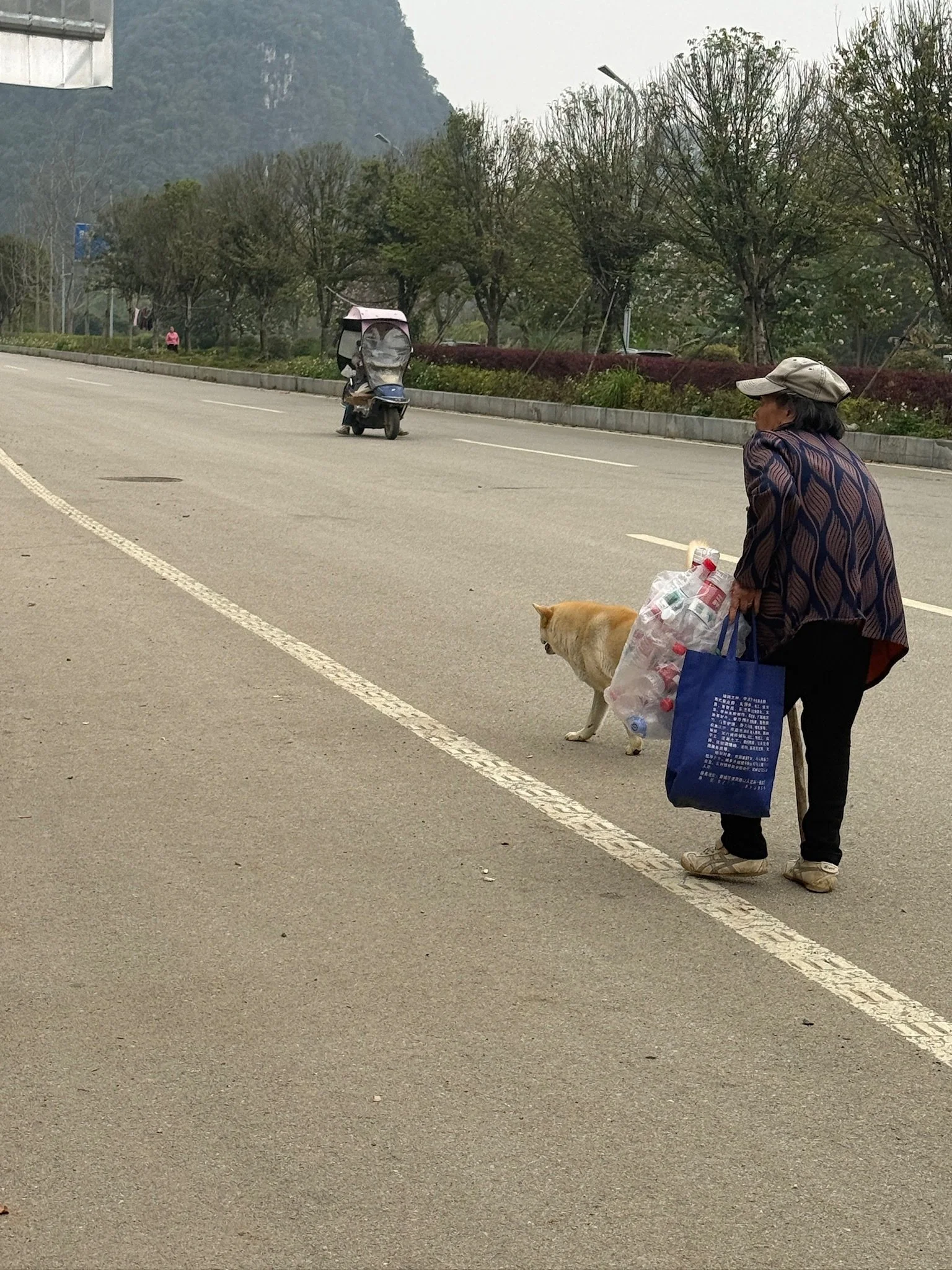
As we arrived, we saw a hunched figure with a walking stick heading home just ahead of us, followed by her two dogs. Seeing us, she smiled—just enough to make me wonder whether she was pleasantly surprised we had actually shown up as promised. She said she had just come back from The Egg. There were many foreign climbers today, and she hadn’t seen us there.
During what had become a routine fruit-sharing session—circling a cardboard box of tangerines and bananas on low wooden stools—we debated whether to boil or steam the dumplings. We chose steaming.
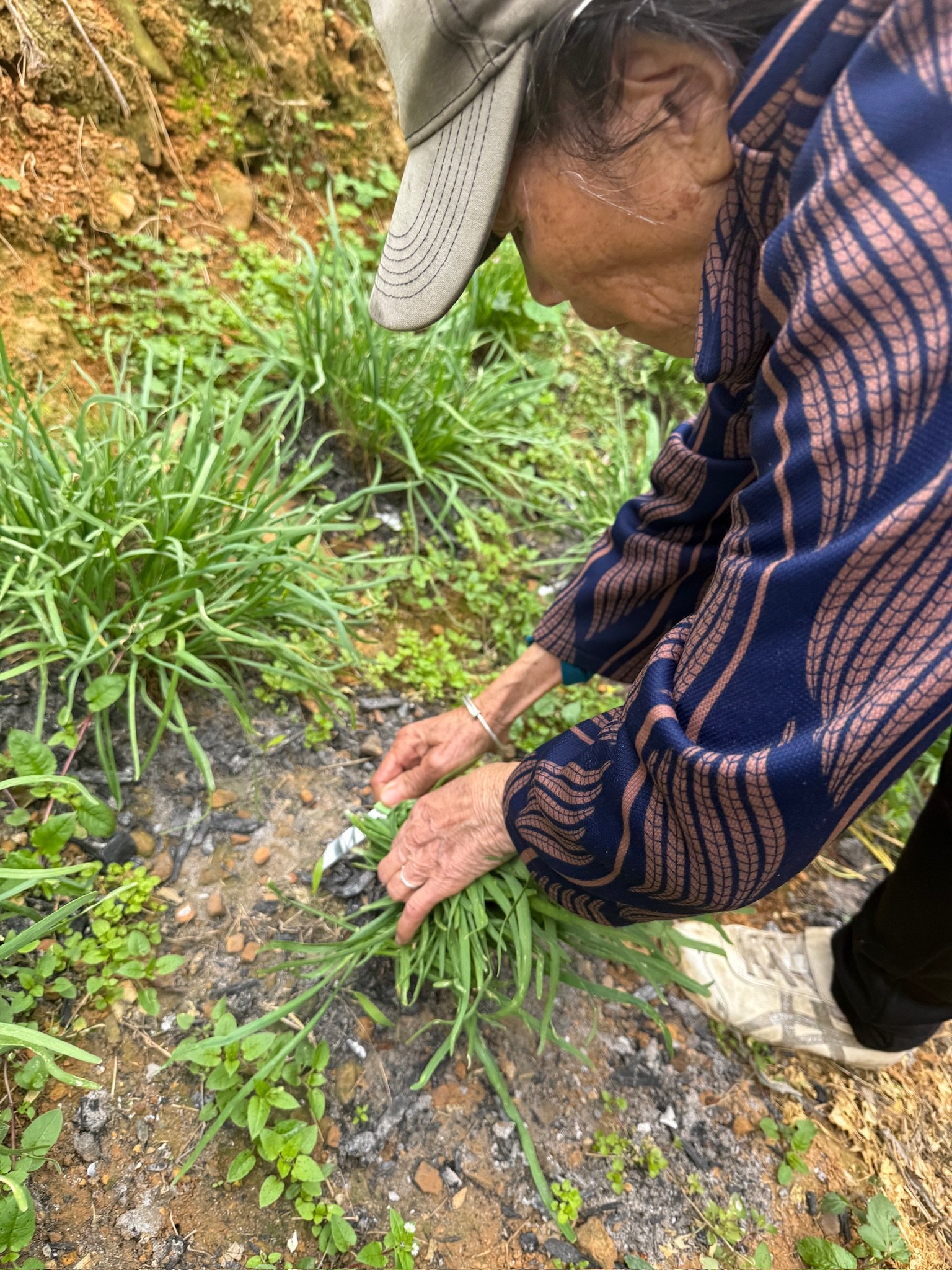
Grandma Lu stood up and signaled that it was time to pick fresh chives from her back garden. She handed me a small knife, which I quickly returned, unsure what to do with it. She selected a cluster of chives, which sprang from the soil like small green fireworks, gathered the leaves in one hand like a ponytail, and cut close to the ground with the other. In this way, we picked seven or eight clusters, enough, we thought, to mix with the pork.
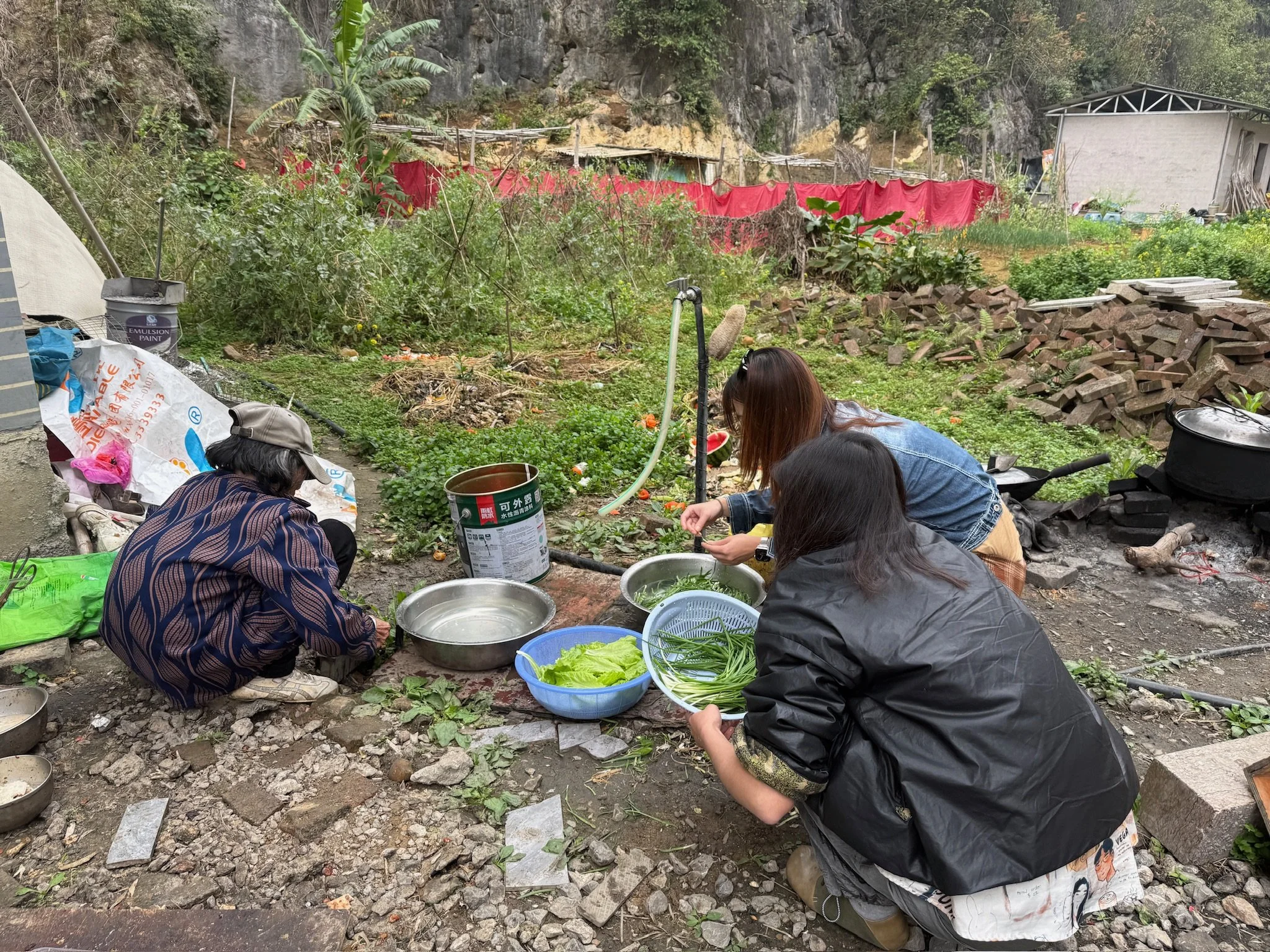
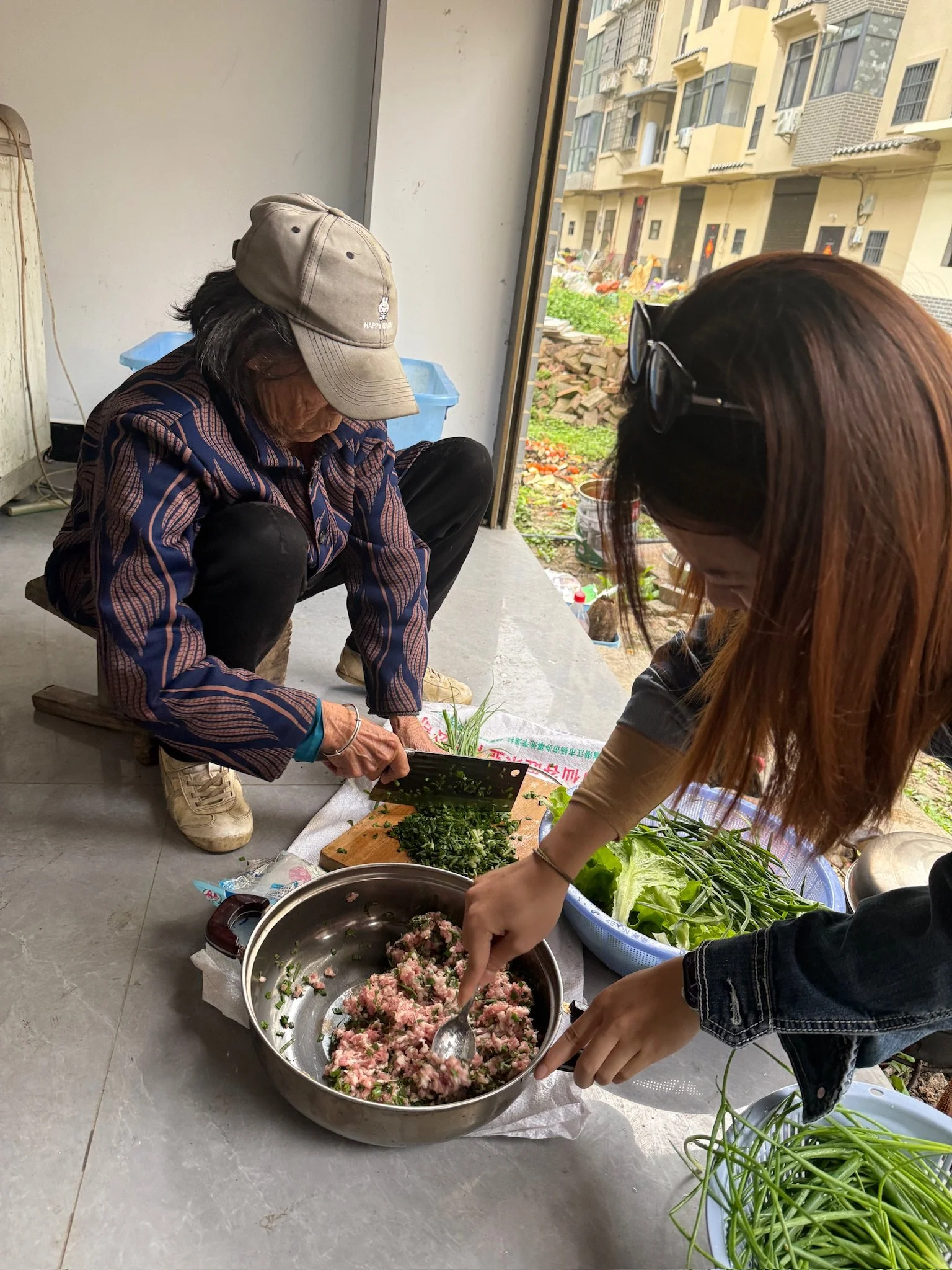
The four of us rinsed the chives and some green onions under a faucet outside the house, the water running straight onto the ground and eventually into a pile of what looked like construction waste. Then Grandma set a thick wooden chopping board on the ledge by the front door and began cutting the greens into fine rounds. As she chopped, Jingwen and I mixed the fresh greens with pork, two eggs, and salt in a metal pot. The task was simple, but working crouched on the ground quickly made my back ache—a reminder of how unfamiliar this way of cooking was to me.
By the time the filling was ready, Kayla’s curiosity about the climbers at The Egg got the better of her, and she biked over to take a look. Jingwen and I moved to a nearby round wooden table and began wrapping dumplings, talking about nothing in particular.
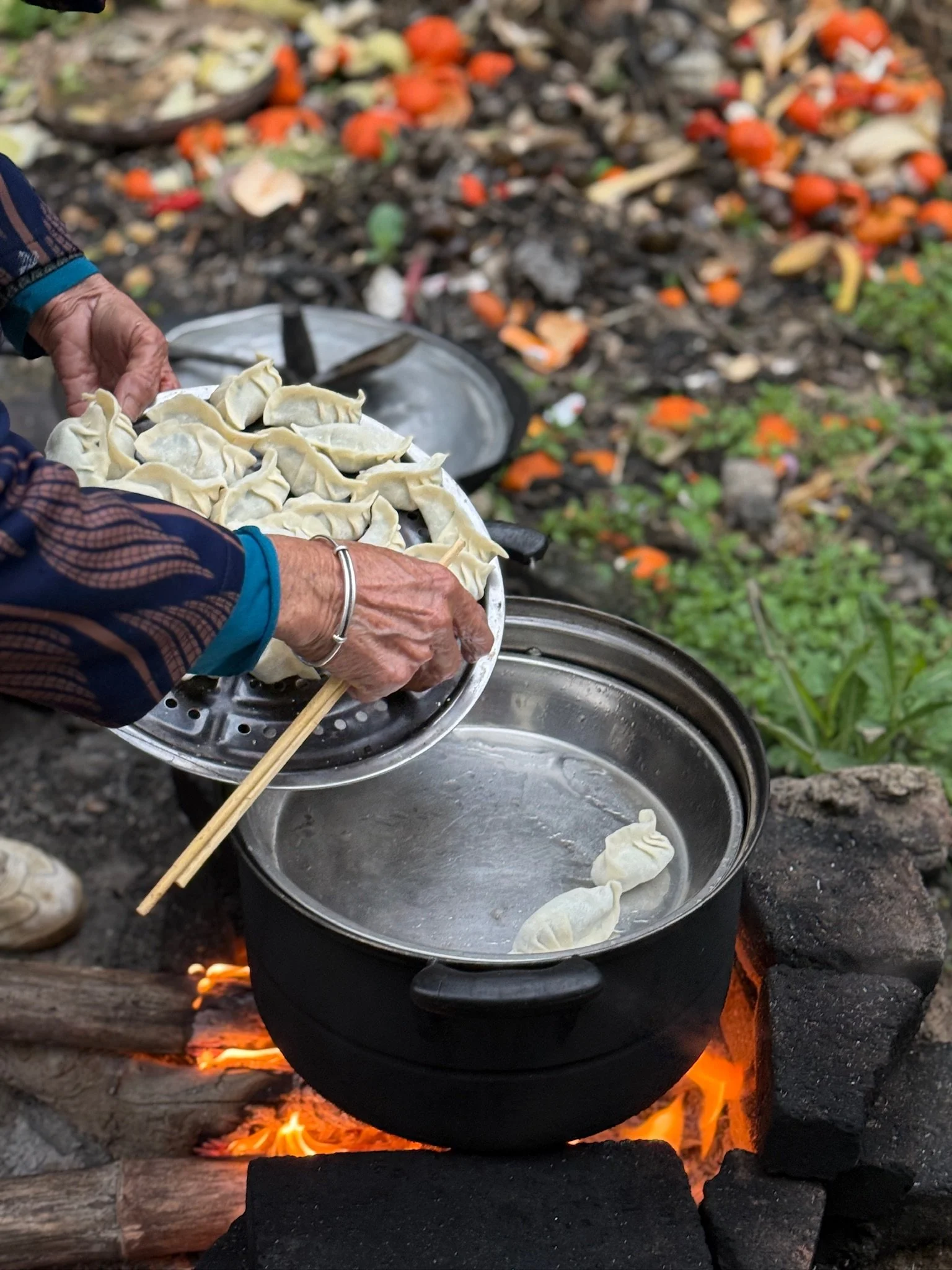
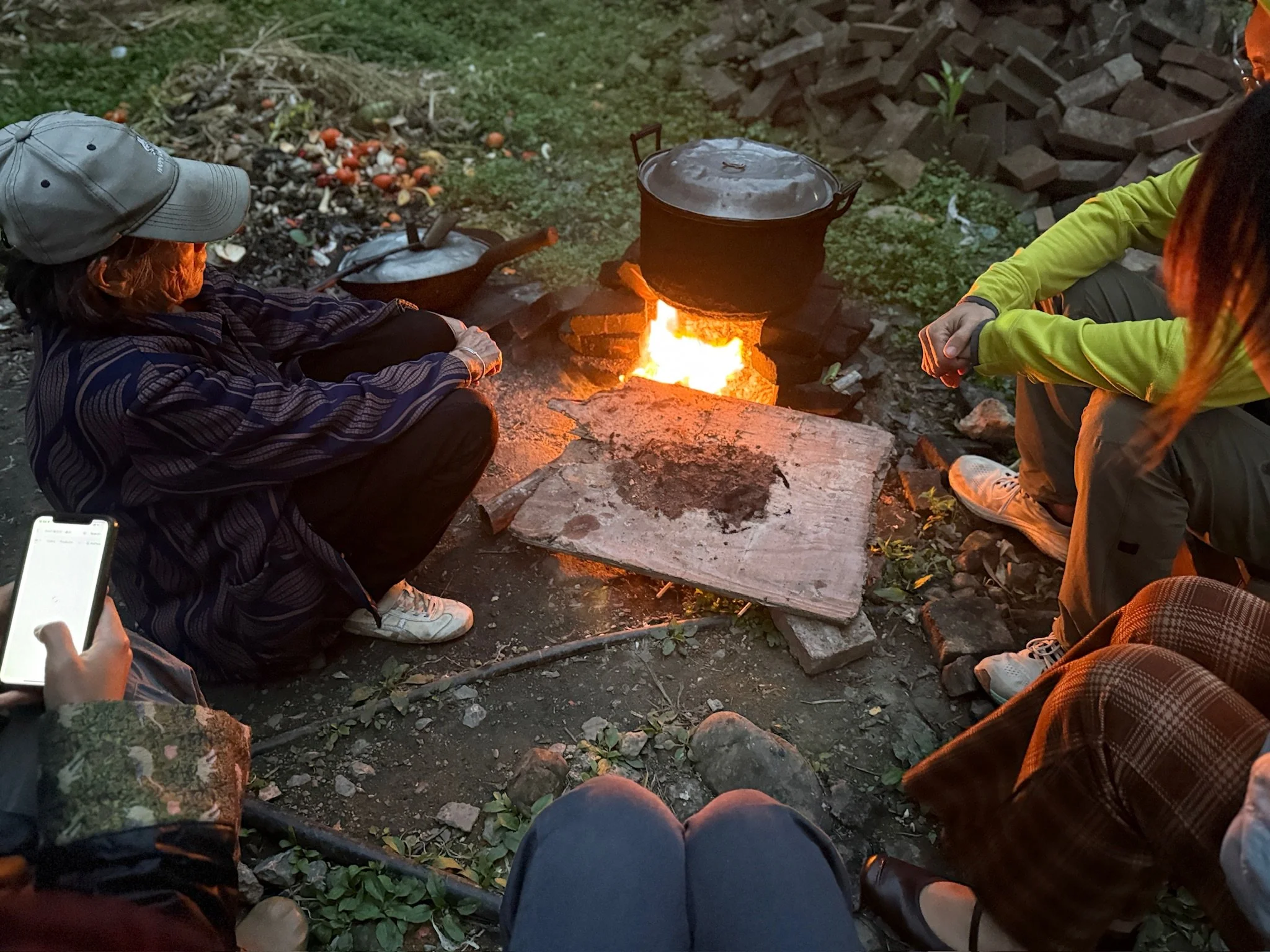
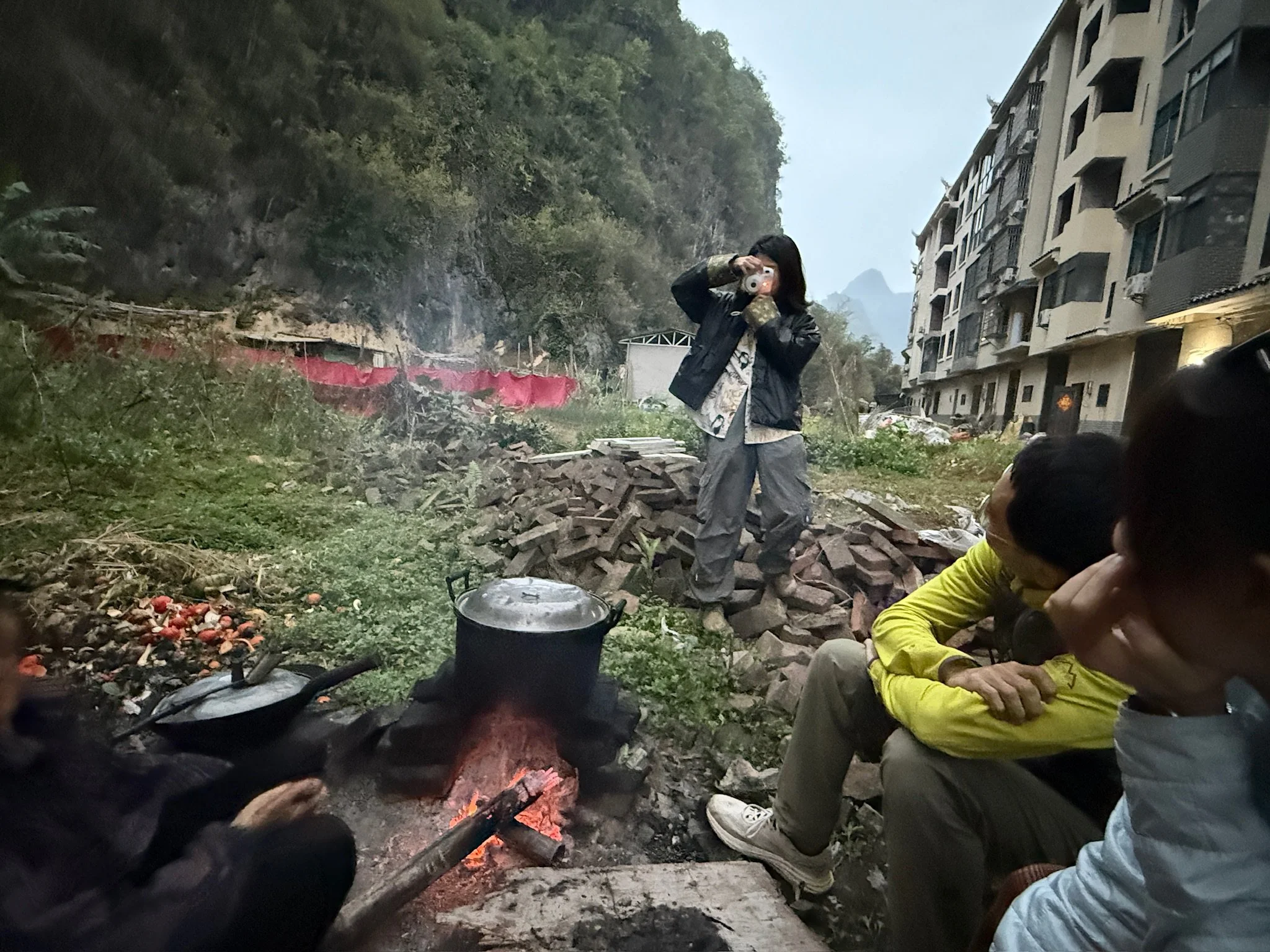
At some point, our friend Tc—an experienced climber and coach who had first introduced me to The Egg—arrived, carrying another box of milk. Grandma Lu happily continued chatting with him as she started a fire with chopped bamboo in a loose brick stove in front of the house. At the bottom of a large pot, she placed yams in boiling water, then carefully arranged two tiers of dumplings above them and covered everything with a lid. The sky was turning a soft gray-blue, and a waft of cool fresh air streamed from the 龙尾山 behind the house. We moved in and out of the house without noticing, as if the kitchen had no walls, as if it extended into the entire world.
Just as we were waiting for everything to cook, Kayla returned—slightly out of breath, but visibly amused. She had run into two separate groups of climbers at the crag. Both were from Canada, she told us—one from Vancouver, the other from somewhere ending in “-ton”—Edmonton, I guessed—and yet the two groups had not known each other before meeting here.
It felt quietly astonishing: people from cities thousands of kilometers apart, converging on this small limestone hill behind Grandma’s house.
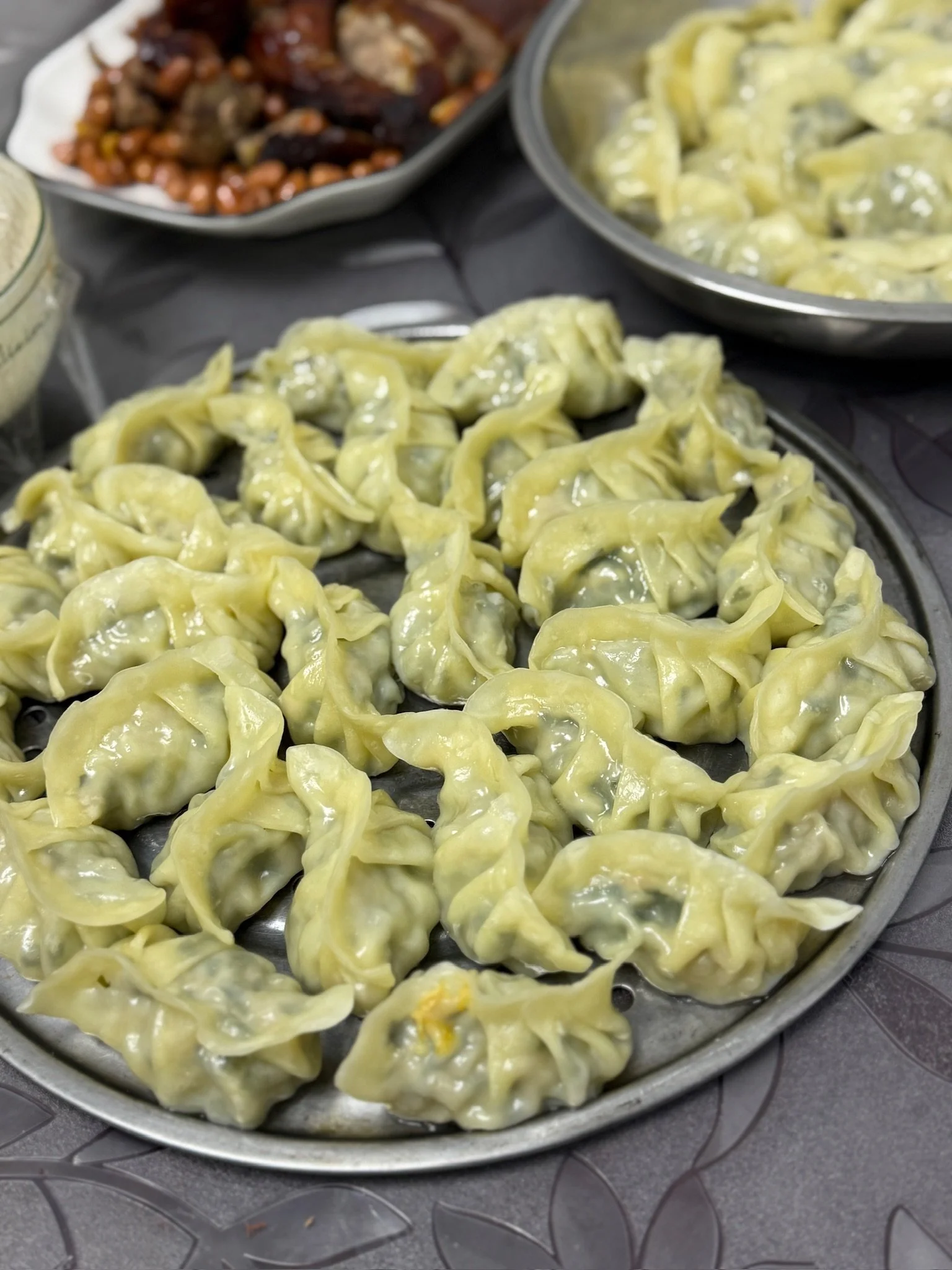
For dinner, Grandma decided we should eat upstairs, in the more modern part of the house. We carried everything up. Each plate of dumplings came out like a giant round flower; the wrappers had turned slightly translucent, revealing a shy green from the chives. Conversation flowed easily as we ate.
Grandma Lu told us that her family used to own three houses in the original Denglongshan village. When the area was replanned, the government compensated them with three new buildings here, including the one facing the main road. But the family didn’t have enough money to renovate it, so they were looking for a “big boss”—someone with capital—to rent it and turn it into a small hotel, as many local houses in Yangshuo have become. Someone had shown interest before, but withdrew without explanation. So they are still waiting.
It made sense, I said, that they chose the roadside house for this—it would be easier for business. And I wondered whether the commercial zone of Yangshuo would eventually expand this far.
After dinner, we went back downstairs for another round of fruit. As the sun set and the air cooled, we sat outside by the fire.
Grandma Lu told us that when she was younger, she used to carry tangerines in two large bamboo baskets suspended from a shoulder pole, walking all the way to West Street—the central commercial area of Yangshuo—to sell to tourists. The strenuous journey took hours each way. Later, as Yangshuo became more popular with foreign visitors, local authorities began driving out “illegal” vendors like her from the center.
“Because we looked bad,” she said.
Kayla began roasting tangerines and bananas over the open fire. Grandma declined to try them, but found a pair of metal tongs to hold the fruit over the flames.
I became curious about how much of the world Grandma had seen. I asked whether she had ever been to Guangdong, just 1.5 hours away by high-speed train, or Nanning, the capital of Guangxi, or Guilin, the nearby city. She waved her hand while answering no to all of them.
Which made it all the more striking that we were sitting there together in that moment—me, a Sichuan girl half raised in Toronto; Jingwen, with a PhD from Arizona; and Kayla, from Fujian, who studied in Scotland.
And yet Grandma could proudly recite where climbers came from: “Guangzhou, Shanghai, Beijing… Sichuan… even Xinjiang.”
“And 外佬 (foreigners)! ” I added impatiently.
“Yes!Also foreigners.” We laughed, as if we were in on the same joke.
Staring at the fire, I was suddenly struck by how Kayla described finding the Canadian climbers today. She had not gone as a climber arriving at a crag, but as someone coming from Grandma’s house, looking for the climbers who had come to “her” mountain. It was a small shift, almost unnoticeable—but it changed the direction of attention.
In that moment, it felt like our roles were beginning to shift, too.
As I left Grandma’s house that second time, I found myself thinking about her life as a rural woman. Like many of her generation, she began with years of uncompensated labor—farming, caregiving, sustaining a household. As China transformed rapidly around her, she struggled to claim a share of its benefits, while at times being treated as a symbol of backwardness and underdevelopment. More recently, the land she was deeply attached to had been reallocated through planning, exchanged for unfinished buildings whose future value remained uncertain.
And yet, she was also not like many others—because of The Egg.
Because of The Egg, she meets young people from around the world who come to her mountain and spend entire days there. Because, twenty years ago, a group of young foreign climbers on bikes thought this place might be good for climbing. Because the international climbing community included it in guidebooks. Because her family widened their road to accommodate visitors. Because her late husband built and maintained the steps up to the crag.
Because of all this, we were able to sit together and eat dumplings that night.
But what about the future?
What forms of responsibility do we owe to families like Grandma Lu’s, whose land has quietly become part of a global climbing commons? How might the benefits and burdens between the family, climbers, and other stakeholders be shared more fairly? What happens if a “big boss” arrives with the capital to privatize the space? What happens when Grandma can no longer walk up to the crag each day?
And how might we care for this place—together?