04 | Our first visit
2026. 3. 21
Before heading to The Egg at 10 in the morning, a friend messaged to say the East Face was already full of climbers and suggested that we go directly to the Fried Egg Face. When the Didi dropped us off by the sidewalk, we quickly walked up to the East Face and asked around. The climbers told us that Grandma Lu hadn’t arrived.
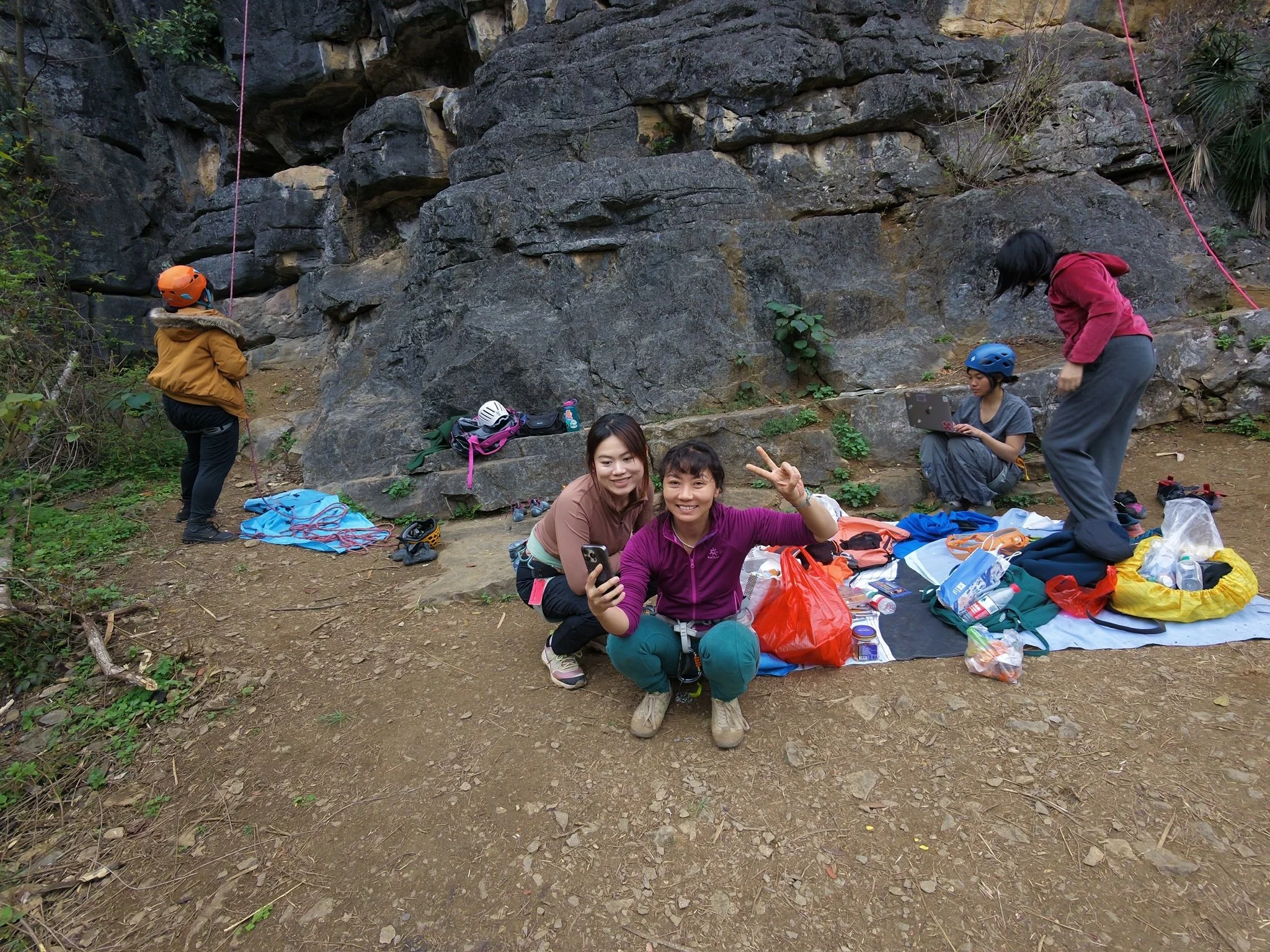
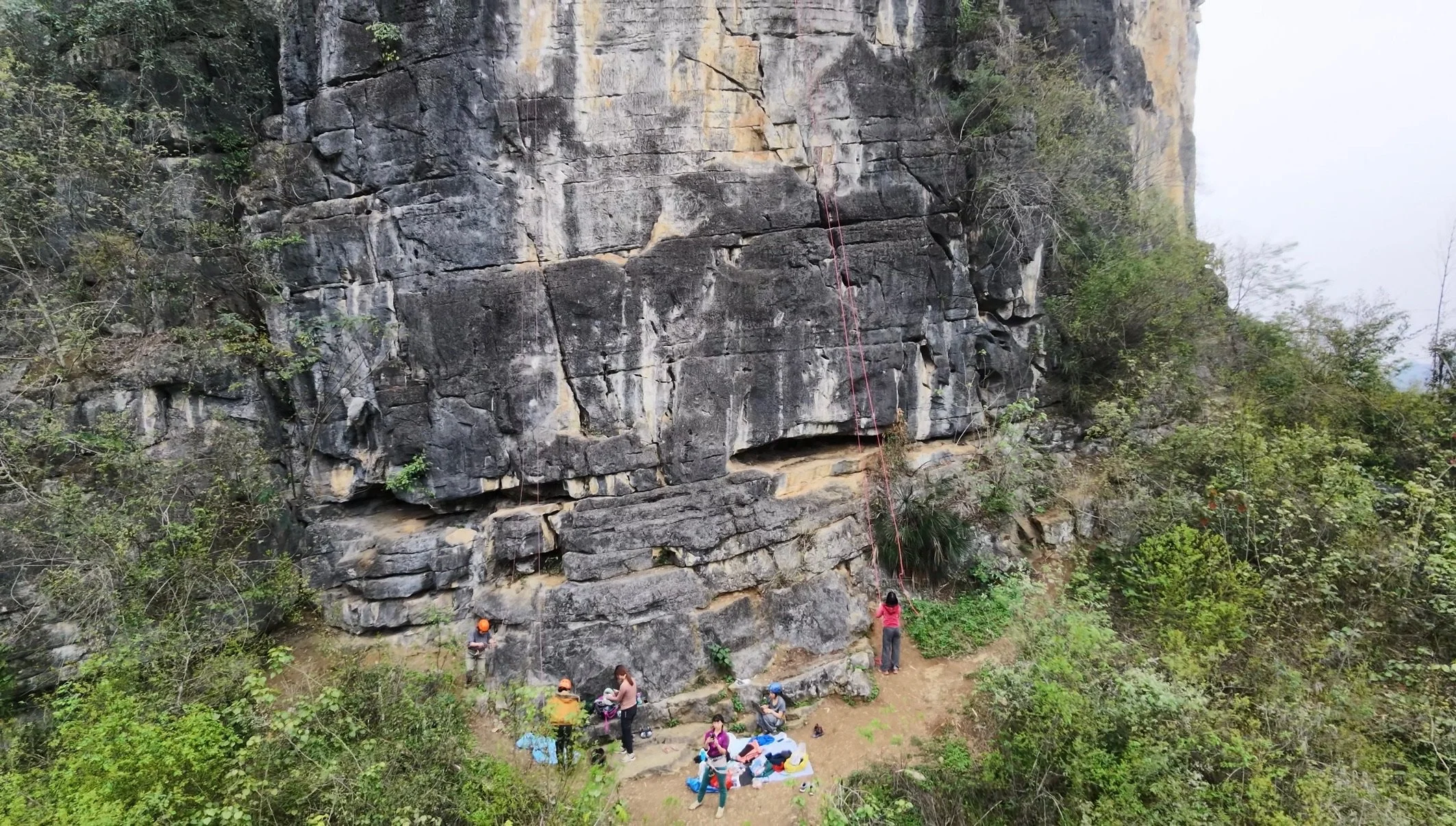
We went around to the Fried Egg Face. Looking down, the plastic streamers on Grandma’s vegetable patch waved softly. We began climbing. The warm-up route we picked was set by Kalle Viira, the Finnish climber who “discovered” The Egg. I went on top rope and took a couple of falls at the beginning before struggling up the rest with pumped forearms. We took turns filming videos in English, jokingly explaining to Kalle that the route was unfairly graded.
11:30 came, and Grandma Lu was still nowhere to be found. I realized that I had never seen her on this side of the crag, since it seemed less popular. Kayla, being the extrovert that she is, went to the East Face, added a climber on WeChat, and asked him to help us keep an eye on Grandma.
After some more climbing in the serene Fried Egg Face, I was hungry enough to take a food break. Then Kayla shouted while looking at her phone: “She’s here!!” She shoved her phone in front of my face. It showed a WeChat message from our informant: 她来了!!! (She’s here!!!)
I dropped everything and jogged toward the East Face. It was 12:45, I noted.
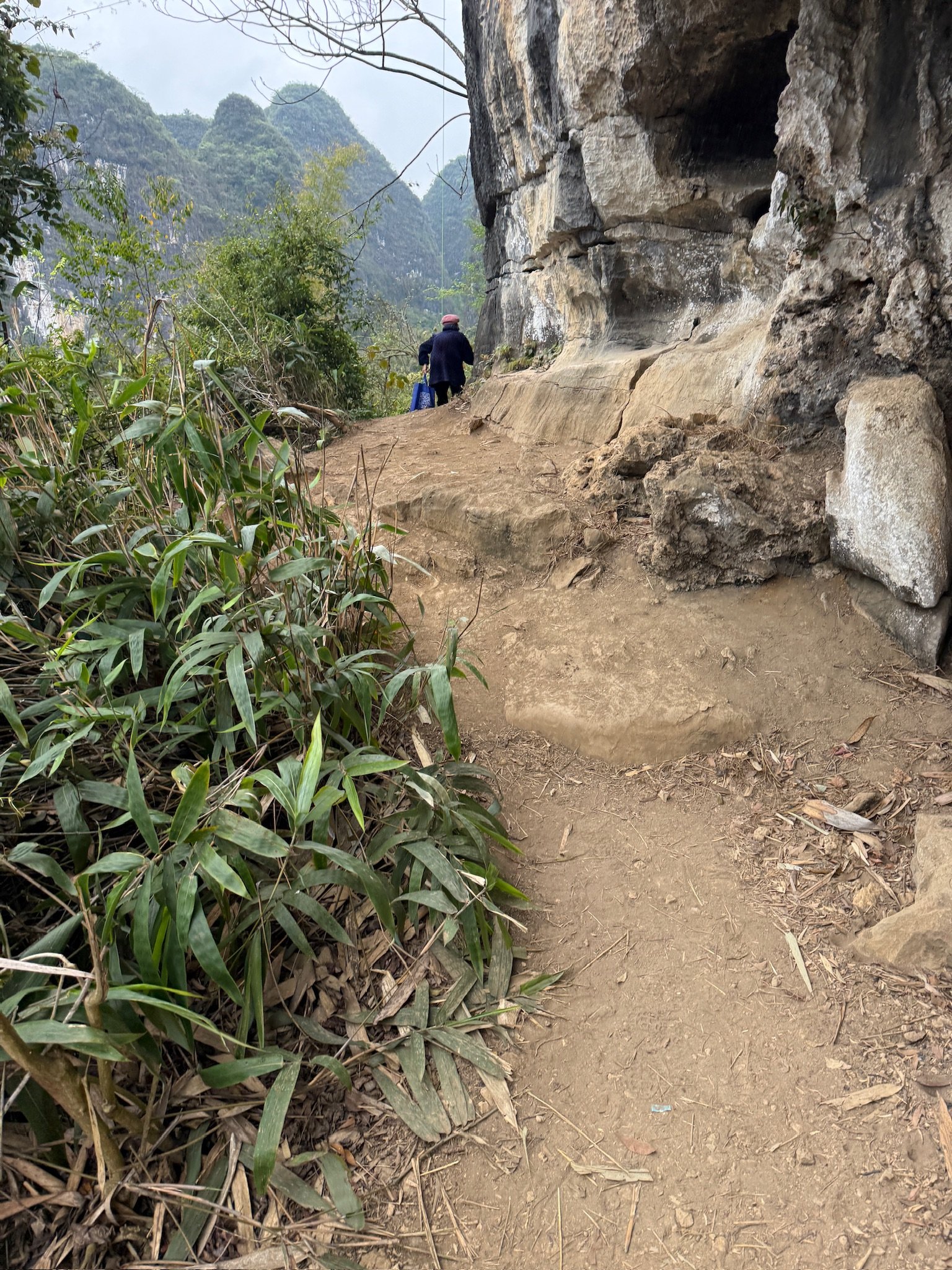
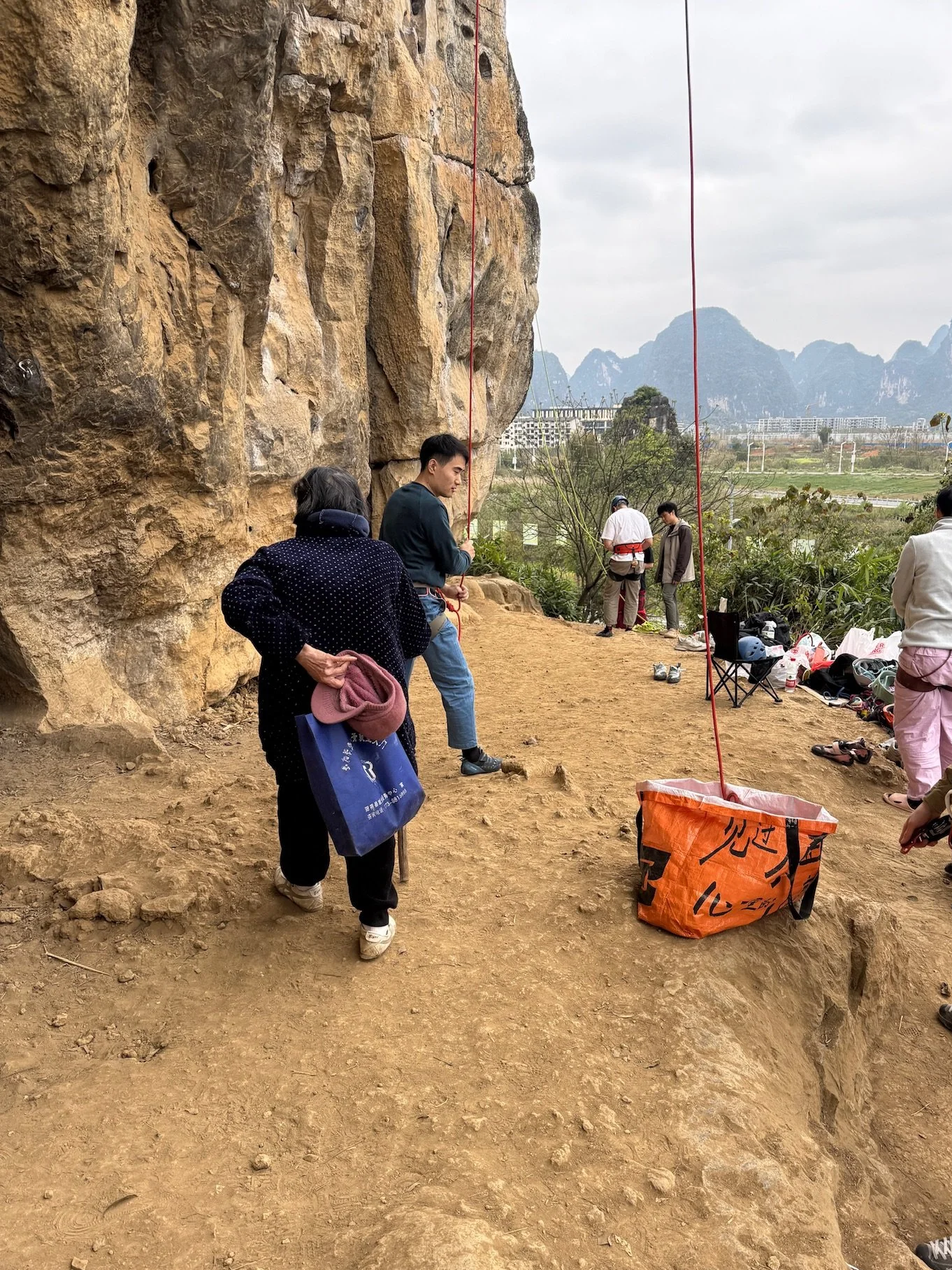
Past groups of climbers, I walked along the narrow rocky path on the left side of the crag, looking for the familiar figure. After a few bends, I saw her—back hunched, in a dark purple and black jacket with a pink knit cap, right hand on the rock and left hand on a walking stick—walking rather briskly away from me.
When I caught up, she was talking to a group of three climbers, confirming whether everyone had paid the 2 kuai.
She turned around, and her smile signaled that she recognized me immediately. She showed me her QR code. I told her we were a group of six at the Fried Egg Face. She said that if I paid for all of us, it would save her the trip around the crag.
I told her I wanted to learn more about the story of The Egg. We sat down right where we were, on the slightly cold, narrow rocky path, and began to talk.
She remembered the first climbers as foreigners (外佬). By the time they showed interest in her mountain (according to a Guidebook, around 2005), she already knew about climbing from other crags near her village being developed. Her family didn’t mind a few white climbers adding bolts to the mountain, because although their garden extended right up to it, the rock itself had no obvious use or value. She later told us that the narrow path around the crag had also been chiseled out by the first route setters.
But her family’s direct interaction with climbers began immediately. The path leading to the crag was the same small dirt road connecting her old family house to their garden. What she called a laoban (老板, boss, likely someone affiliated with early outdoor businesses) suggested to her husband that they widen the road by their house and use it as a paid parking area for scooters and cars. They charged 1 kuai per scooter and 5 kuai per car.
Later, after a dispute involving a possibly lost or stolen scooter, by her daughter-in-law's suggestion, the family switched to charging 2 kuai per person. This system persisted through massive changes in the village. Their old family house—and much of the village—was relocated. Access to the crag completely changed. The new parking area is now the wide sidewalk.
Looking down from where we were sitting, she pointed to the diminished old village we had seen the day before and recalled that there used to be “many houses” there. “My husband is now dead. My older son is also gone. One of the white climbers died too.” We believed she was referring to Paul Collins.
We asked if we could visit her home to buy some vegetables. She happily agreed to take us.
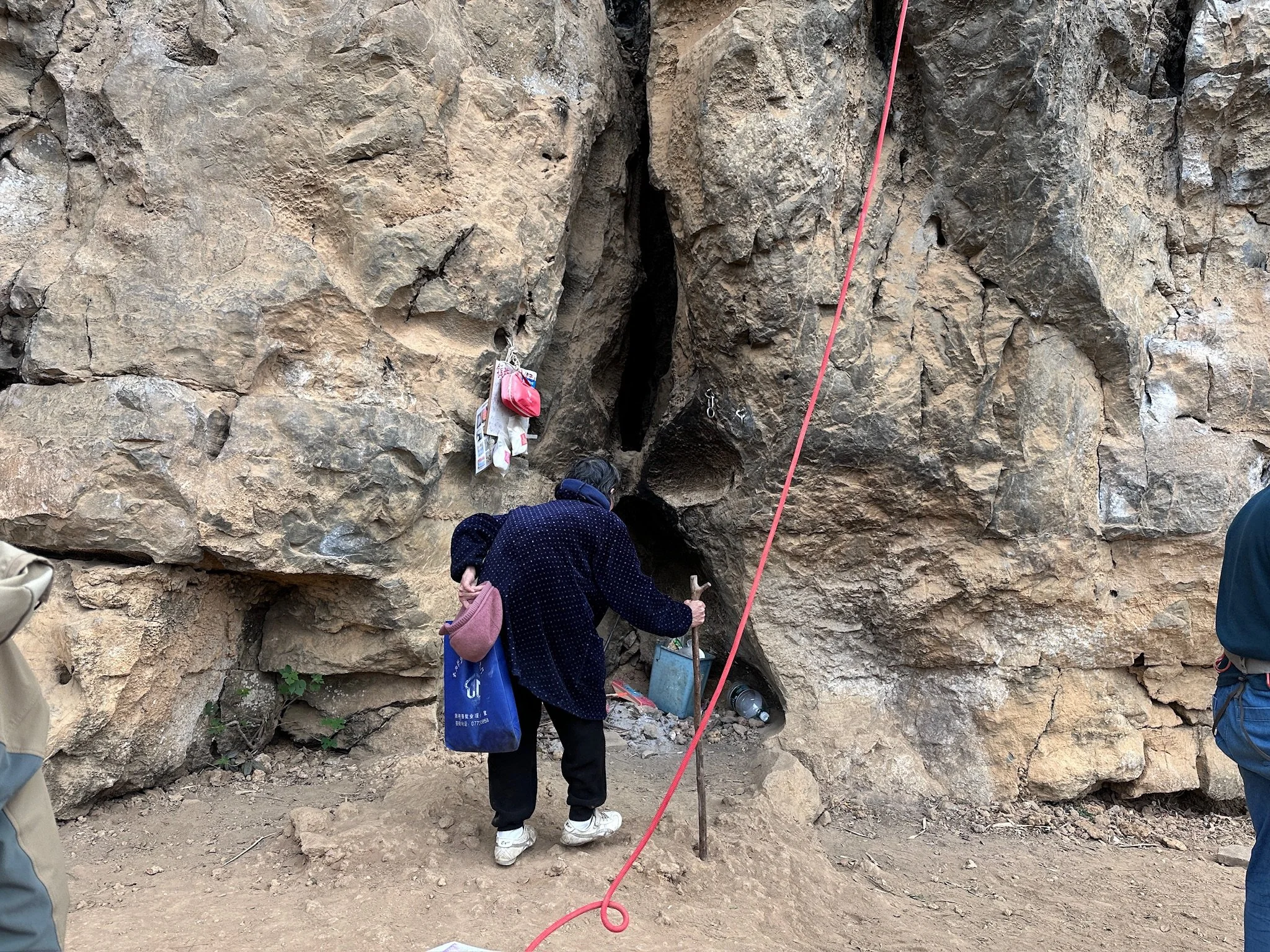
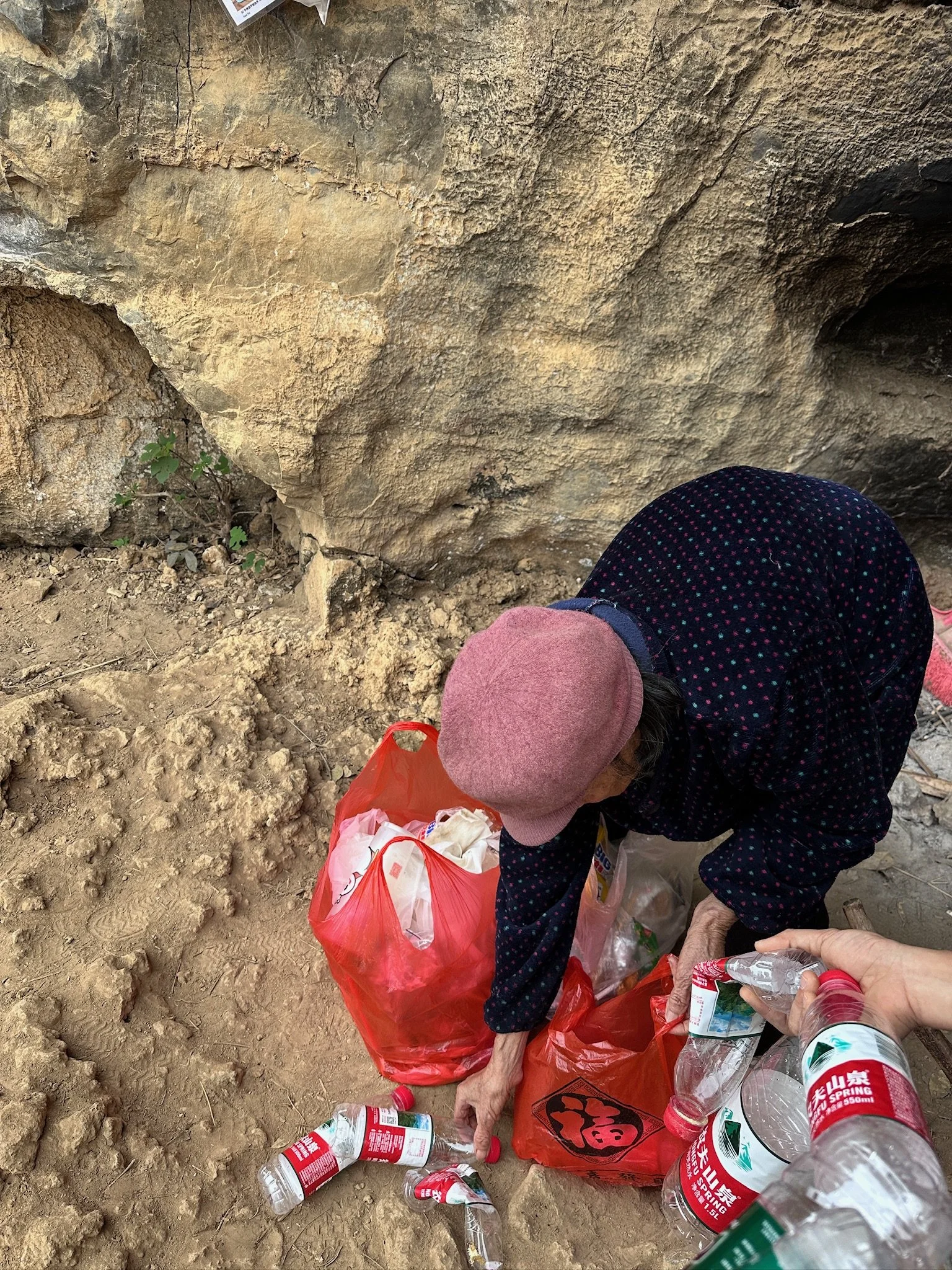
She slowly stood up, steadying herself with her walking stick. As she passed the garbage can she set up, she began sorting plastic bottles from other waste—napkins, instant noodle containers. Another climber followed her lead and began separating their own trash. Kayla, Jingwen, Grandma Lu, and I descended from the crag, each carrying bags of garbage like we just went shopping.
As we made it down to the sidewalk, Grandma gestured for us to throw the rest into the large government-issued bins, and continued to carry the plastic bottles. The conversation resumed.
The old Denglongshan Village, where Grandma Lu had married into at age 20, had undergone two major transformations that led to two resettlements of her home. The first was the construction of a four-lane paved road with wide sidewalks, which split the village in half and made The Egg one of the most accessible crags in Yangshuo. This forced her house to move to a new location—land that was later again collected for a high school, which is still expanding.
Massive replanning is not unfamiliar in rural China, but in my previous experience, new roads were usually expansions of older ones. Here, however, an entirely new road was drawn through farmland, completely reshaping the landscape. I was still confused about where Grandma’s current house was, since there were no houses in sight.
“You just have to find that mountain—my house is underneath.” She pointed to one among the dozens before us.
This prompted one of our biggest curiosities: do all these karst mountains have their own names?
“That is 拱背山 (Hunch-back Mountain),” she said, pointing to a tall one directly ahead. “And the one behind my house is 龙尾山 (Dragon Tail Mountain).” It was lower, shaped like three pointed hills fanning out. “And that’s 鸡头山 (Chicken Head Mountain).” Not seeing the resemblance only made me try harder to look.
And The Egg—before climbers called it The Egg—was called 白山根.
—
白 (bái) → white
山 (shān) → mountain
根 (gēn) → root / base / foot
So literally: “the white mountain root” or “the base of the white mountain”
—
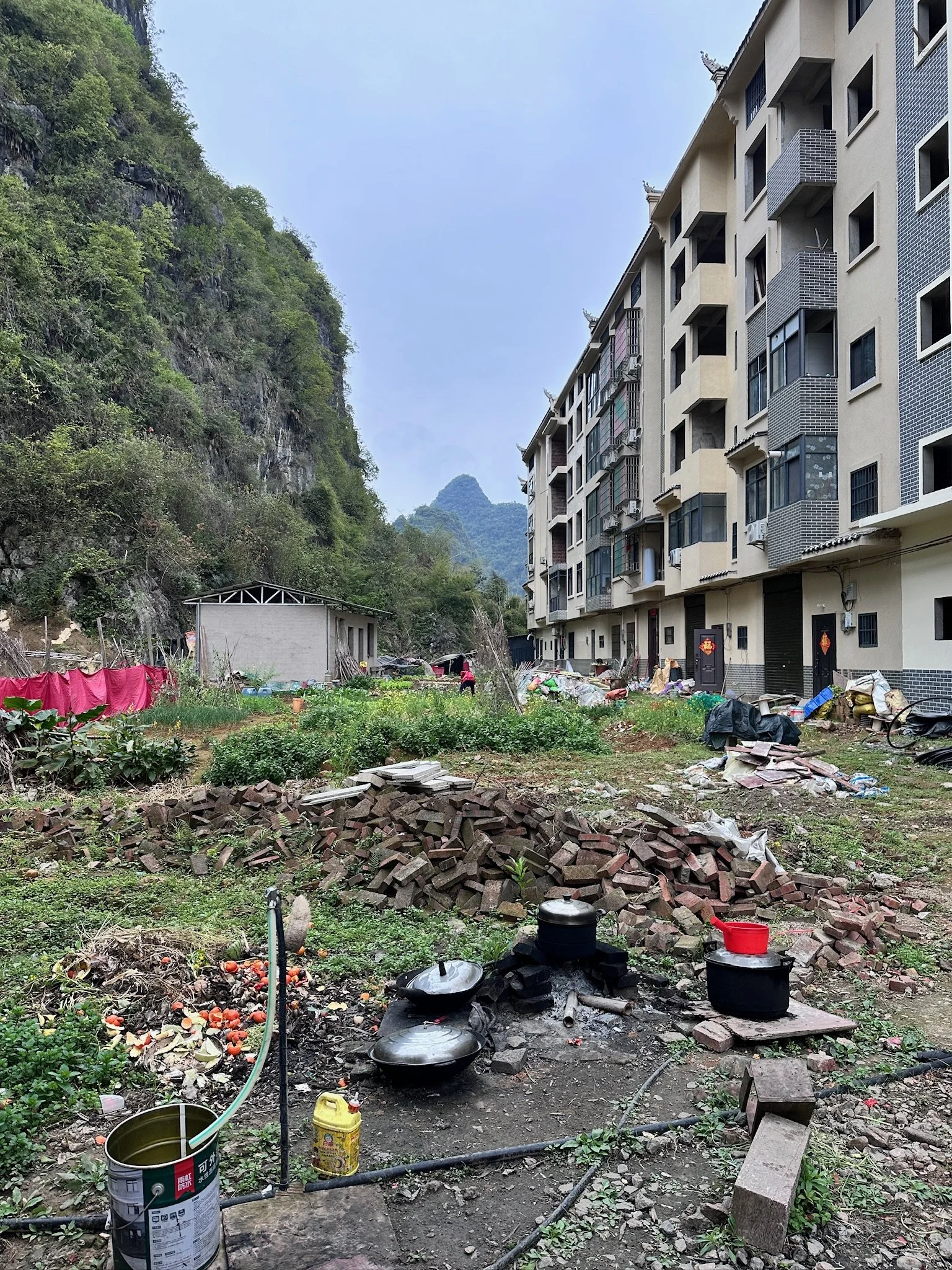
With “Dragon Tail Mountain” as the backdrop, Grandma Lu’s house was among two rows of spacious four-story buildings, with light yellow exterior walls, big windows, and dark Chinese-style roofs. A closer look revealed, through unfinished windows, that only parts of these houses had been refurbished. Grandma Lu’s extended family received three such buildings as compensation for their three former houses. The family decided to furnish only the first two levels of one of them, leaving the others for potential laobans to rent and convert into small hotels.
The front of her house was scattered with traditional cooking utensils and a simple brick firewood stove. The second floor looked like a modern three-bedroom apartment, with a kitchen equipped with a microwave, rice cooker, and electric dish dryer. The finished interiors stopped abruptly at the stairs leading to the third floor, which opened into exposed concrete.
After showing us the house, which she currently shares with her oldest grandson, we went back down to the first-floor living room, which functioned more like a large garage and storage space. Grandma took out a cardboard box full of tangerines and bananas, and we sat around it on small wooden stools and ate like a good bunch of grandchildren would.
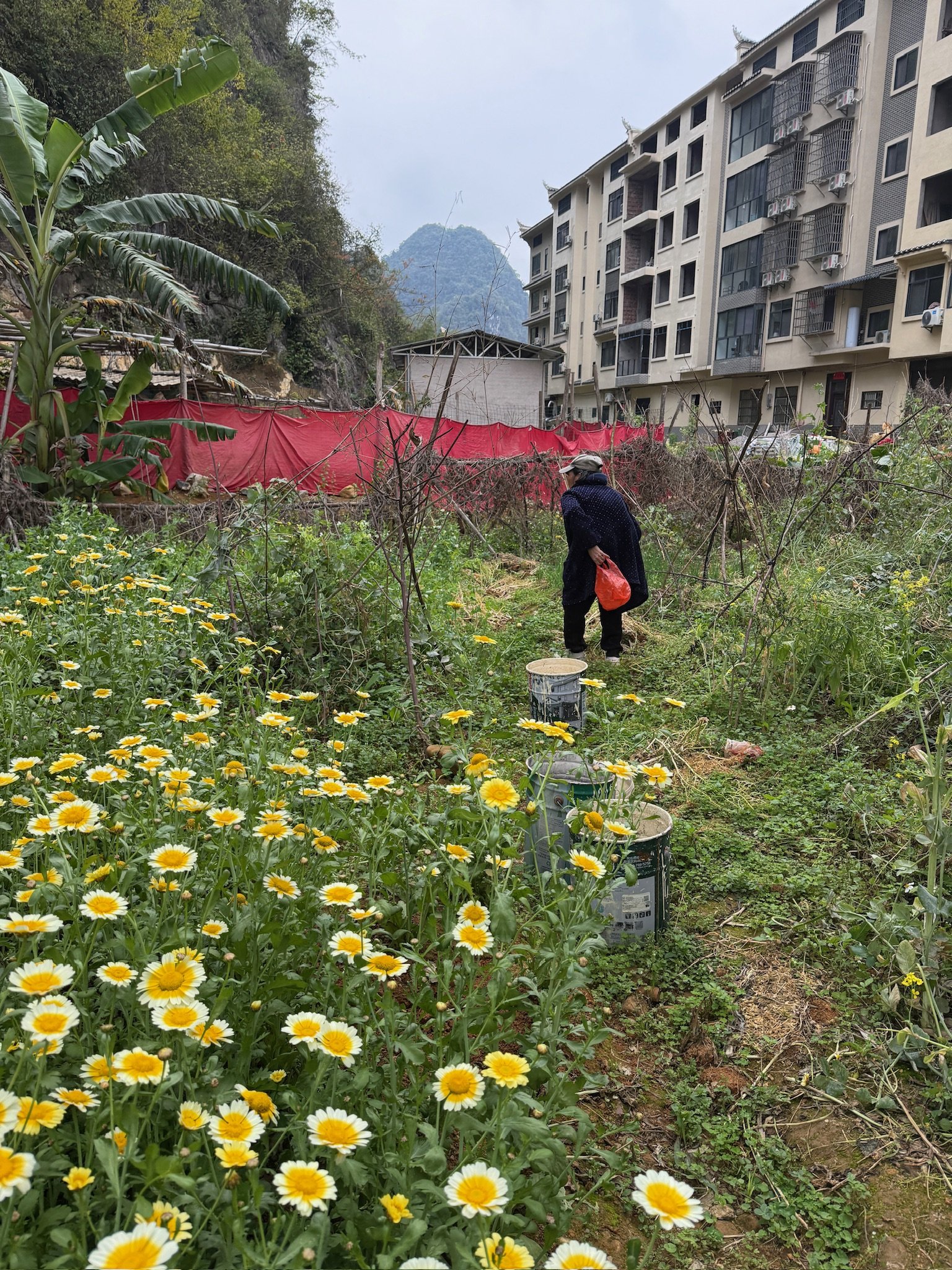
Then Grandma led us through the back door into her vegetable garden, which blended into those of her neighbours. There were small patches of pea sprouts, chives, green onions, beans, lettuce, and other plants I didn’t recognize. She told us she could never finish her produce and spoke with pride about her daughter-in-law often dropping by to pick free vegetables.
Looking at the different shades of green around me, I asked for pea sprouts—a memory from my childhood in Sichuan. Grandma bent down and picked the tender tips. She also offered peas and bamboo shoots she had gathered earlier, handing everything to me in two large red plastic bags. Kayla was interested in a pomelo and a small pumpkin. Despite our serious protest, she insisted that we not give her any money. I searched carefully around the first floor for her QR code, but couldn’t find it.
Pointing to the small circles of chives, Jingwen asked if we could come back the next day to make dumplings together. After realizing it was a serious suggestion, Grandma agreed, and we said we would meet her at The Egg around three the following day.
Walking back to The Egg, carrying the gifts, I felt relieved that we could now find our way to her house. I looked down and was amused to see that I had been wearing my harness and chalk bag this entire time. We still had some sunlight. We climbed some more.