03 | A dissolving village
2026. 3. 20
Because I had sent my passport to the Beijing Embassy for renewal and was without an ID for the entire month, I had to take a long-distance car-hailing service from Guangzhou to Yangshuo. The 400+ km trip took two hours longer than the expected five. I could have waited until I received my new passport, but an anxiety had been building in me since my last visit in January, when I decided to turn this into a research and practice project.
I was anxious to return to The Egg because I had no other way of contacting Grandma Lu. She was among the last 6% of the Chinese population living without a cell phone. Without a way to reach her, I found myself imagining that any number of things could have happened—things that might make her disappear from my world: her old age, the cold weather, and the possibility that I might not see this project through. This anxiety deepened during the tedious car ride, compounded by my backache, especially because she had told me she would leave the crag every day after 3 p.m.
I arrived at the hotel at 4:17. It had been raining lightly all day. After a brief hello, Kayla, Jingwen, and I took a 15-minute Didi ride to The Egg. When the driver dropped us off by the side of an empty sidewalk—where a few steps up through the bushes would lead to the East Face—he couldn’t help but ask, “What is there to do here?” He seemed surprised when we said climbing. Climbing always feels approximate and distant to the locals.
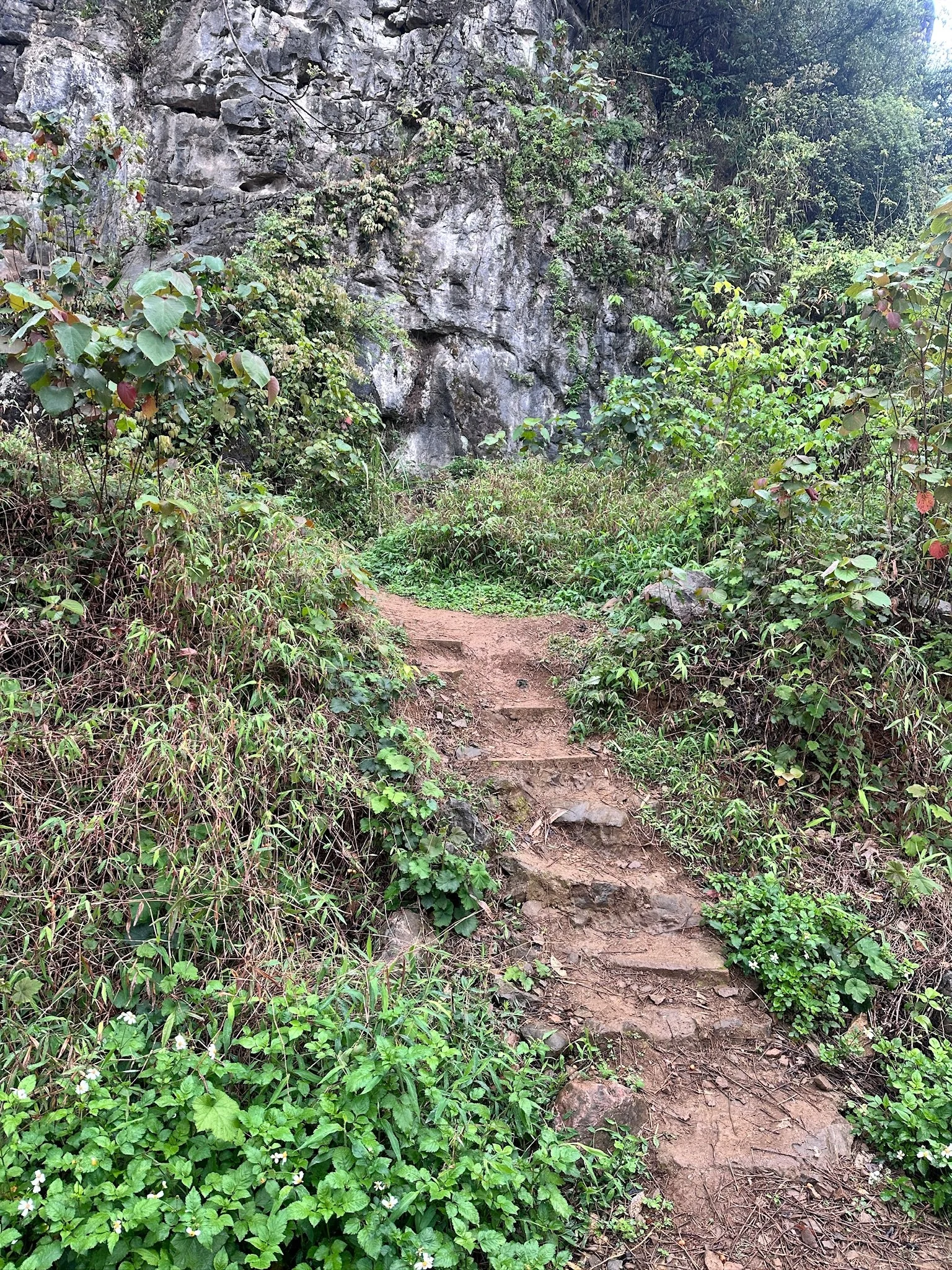
Our friends were already at the East Face, climbing. Grandma Lu was nowhere in sight. We went around the side of the crag, through the cave where she had left the twin candles, and down to the steep rocks you have to descend to get foliage cover for what we jokingly call “going to the bathroom.” There was another group of four or five climbers. I forgot to ask whether they had paid Grandma Lu for the day.
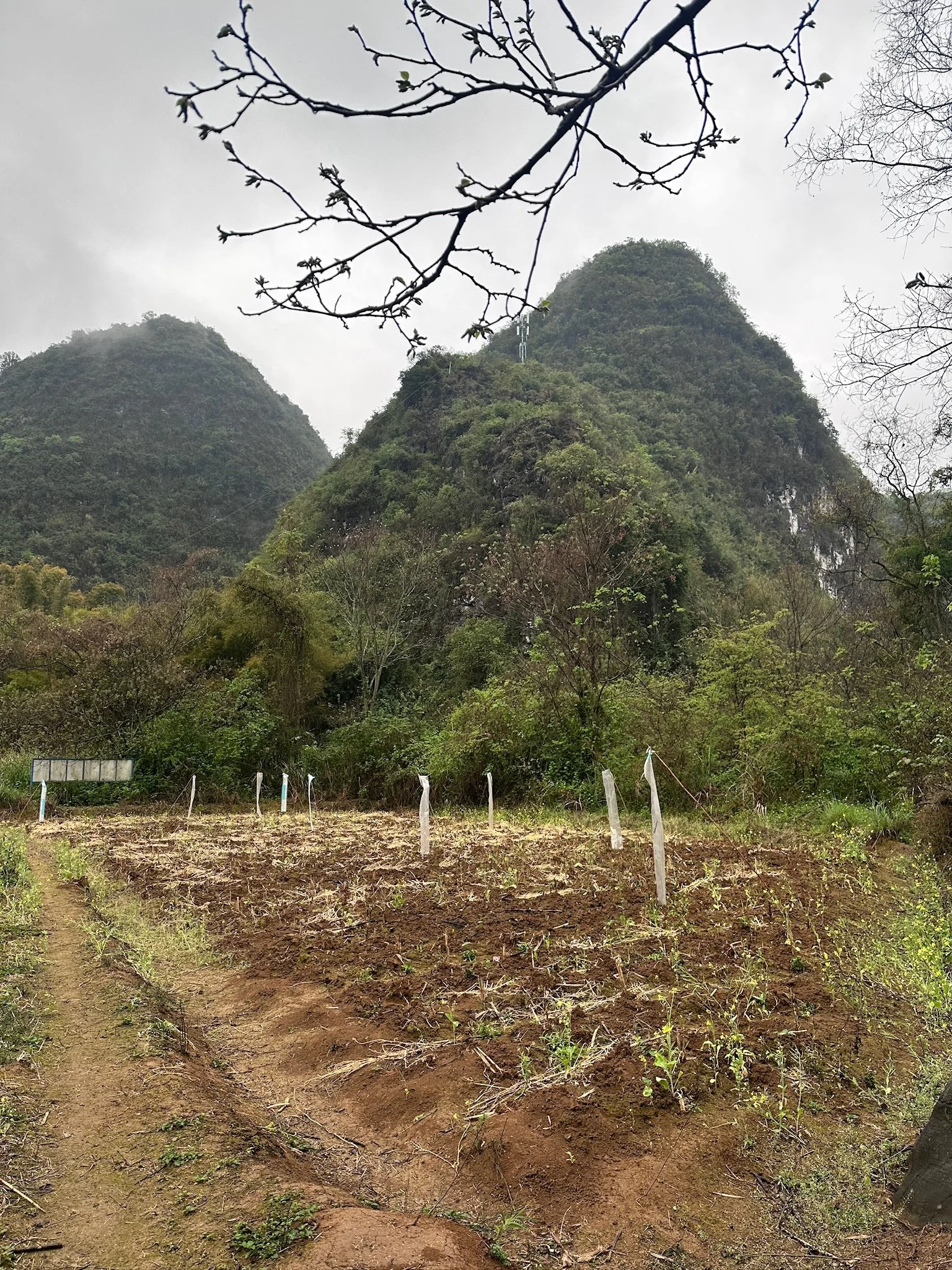
We then climbed back down to the empty sidewalk and walked about 10 meters west to another dirt road leading to the Fried Egg Face. There were no climbers there. I noticed that Grandma Lu’s two vegetable patches had been harvested and replanted since my visit in January. She had installed plastic streamers on tall bamboo sticks all over the gardens—probably to scare off birds from the new seeds. Seeing these changes gave me a sense of relief. It had to have been her work, I told Kayla and Jingwen; it couldn’t have been her grandchildren.
We followed the dirt road along the edge of the vegetable gardens and ventured toward the village. There was only one house in sight—a rundown one-story building with mud bricks and a tiled roof. Scattered tools and buckets suggested it was occupied. I walked up to the window of a lit room and saw someone sitting in bed. Before deciding whether to announce myself, I realized it was an old man, and I signaled to the others that this couldn’t be her house.
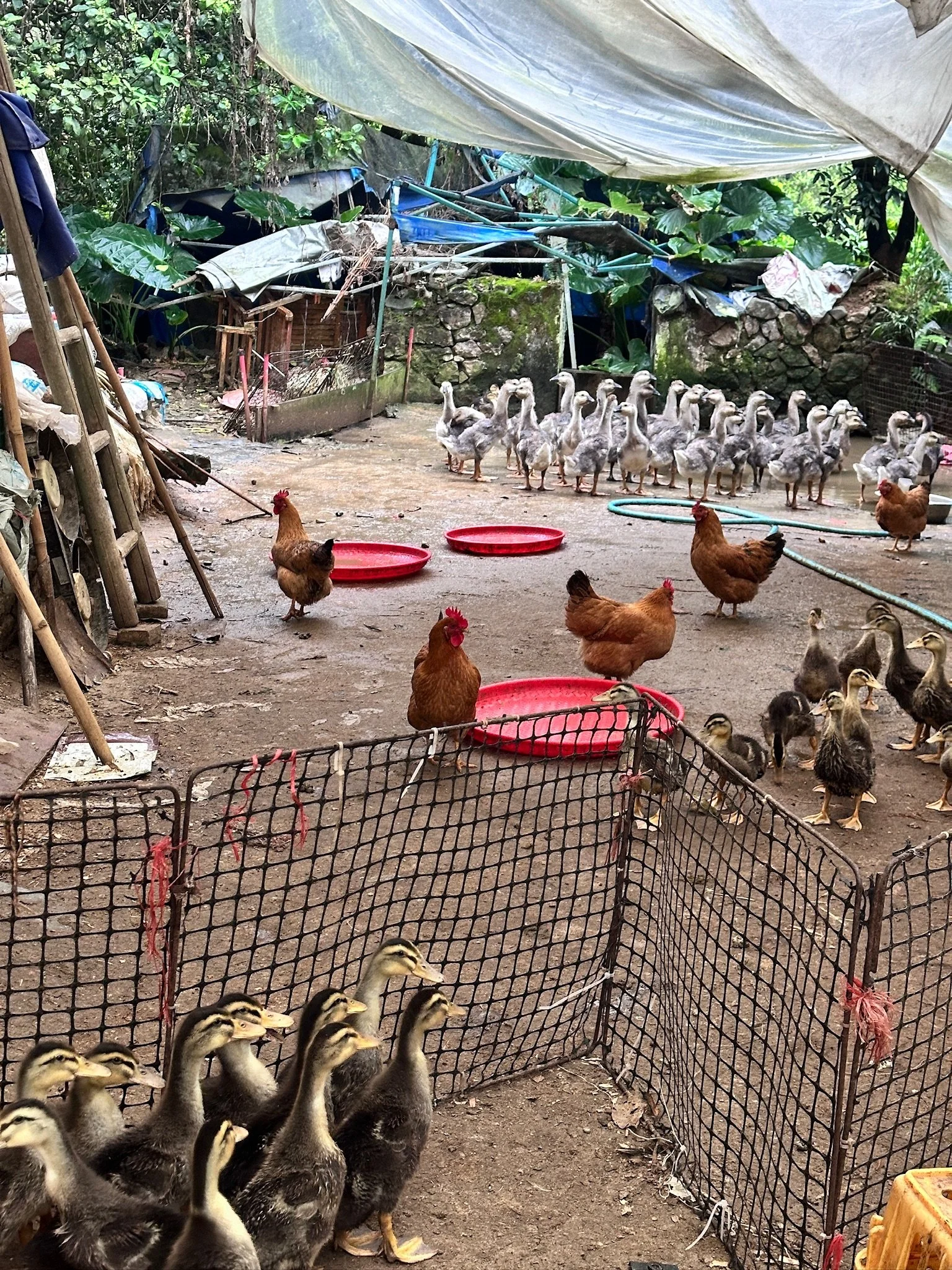
We continued on. The next structure we saw was attached to a sizable garden enclosed by a plastic fence. A middle-aged woman in red was tending to it. We greeted her, and I asked for Grandma Lu by her full name. She said no and waved us away. Only then did we realize that the structure was just a large covered shed without walls, used for raising chickens or ducks.
A few steps further, we found a fenced garden full of animals. The ducks moved in tight-knit groups, almost in unison, while the chickens were more individualistic. We called out, but there was no one around.
Looking around, what we believed to be Denglongshan Village appeared as a large flat area enclosed by “Yangshuo-style” karst mountains, with The Egg among them. As we turned to leave, the woman in red rode away on her scooter. There were piles of construction waste beneath some trees, along with scattered garbage that seemed to have been dumped by a tractor. The village felt abandoned—or at least left to wither on its own.
We checked the map and wondered whether Denglongshan Village might have another half, separated by the main road. Disoriented, I took out my notes from Yangshuo’s oldest hardcopy Guidebook we could find:
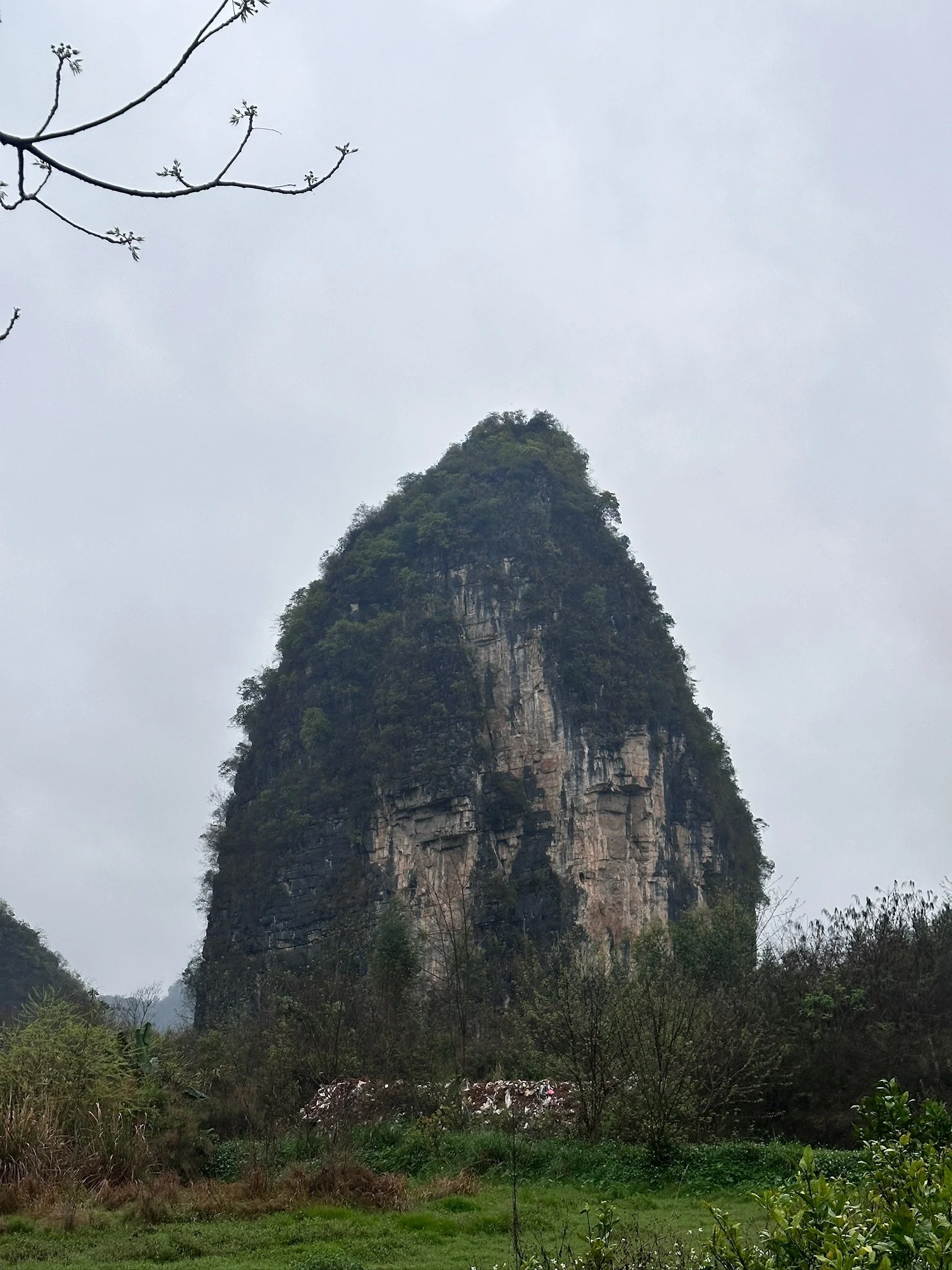
"Approximately 40 meters before the big tree in Denglongshan Village. Turn right onto the narrow paved road for 0.5Km. It will squeeze between a few buildings then wind around and enter a small village. When the road turns to dirt, continue through the village for another 0.5Km and arrive in front of the Fried Egg Face. The mountain is shaped like an egg and very obvious from a distance."
It was getting dark. We began walking back to the main road, trying tirelessly to guess which tree could have been the “big tree.” I found it both amusing and triste to imagine 2005, when a few young white climbers came up this way on bicycles looking for new routes. The road is now a wide asphalt one with broad sidewalks, leading to neat six-story developments. Or perhaps this road is entirely new. Maybe the big tree was cut down during construction.
We walked toward the distant chatter of our climbing friends, toward the mountain shaped like an egg—still obvious from afar.